
How Do Indonesia’s New Supreme Court Justices Shape Tax Governance (2026)?

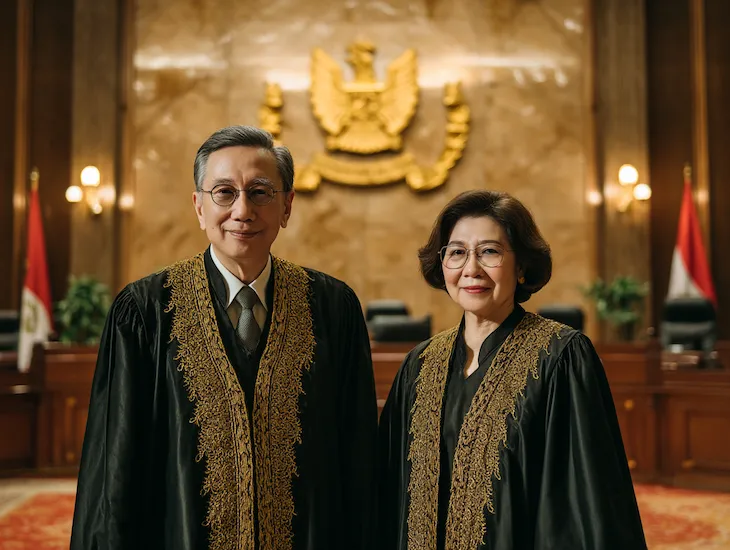
Indonesia’s fiscal landscape is entering a transformative phase in 2026 — marked by the appointment of Budi Nugroho and Diana Ginting as Supreme Court Justices in the Tax Administration Division ⚖️. Their leadership is expected to reshape how fiscal justice, digital compliance, and administrative disputes are handled across the country. For PT PMA owners and foreign investors, this signals a new era of accountability and judicial transparency 💼.
In recent years, Indonesia’s tax environment has become increasingly complex — with evolving Coretax 2026 modules, digital invoice requirements, and tighter audit controls. Many investors have been anxious about how court interpretations affect refund claims, penalties, and compliance obligations 📊. Clear, consistent rulings are crucial for reducing uncertainty and fostering business confidence.
Both justices bring extensive experience from decades of handling fiscal litigation at local and national levels. Their expertise bridges legal reasoning and economic policy — a balance essential to modernize Indonesia’s tax judiciary. The Directorate General of Taxes (DJP) and Ministry of Finance have long emphasized that fairness and digital readiness must go hand in hand 🌐.
For foreign entrepreneurs operating in Bali and beyond, this judicial reform sends a strong message: Indonesia is committed to strengthening legal certainty, improving investor trust, and aligning its tax administration with global best practices 💬.
Table of Contents
- Supreme Court Justices and Indonesia’s Tax Governance Shift ⚖️
- How Budi Nugroho and Diana Ginting Redefine Tax Appeals 💼
- Indonesia Tax Administration Reform and Legal Certainty 📊
- PT PMA Owners and the Judicial Tax Decision Impact 💡
- Supreme Court Tax Appeal Indonesia: What’s Changing in 2026 ⚙️
- Coretax 2026 Compliance and Modern Tax Governance 🌐
- Legal Certainty for PT PMA and Business Confidence 📈
- Real Story: How a PT PMA Won Its Tax Appeal Through Reform 💬
- FAQs About Supreme Court Justices and Tax Governance Indonesia ❓
Supreme Court Justices and Indonesia’s Tax Governance Shift ⚖️
Indonesia’s appointment of two new Supreme Court Justices specializing in tax and fiscal law marks an important milestone for the nation’s judicial and economic integrity 💼. These appointments aim to strengthen tax governance and ensure consistent interpretation of fiscal regulations.
The reform comes at a time when businesses — especially PT PMA owners — demand greater legal certainty in a rapidly digitalizing tax environment. By elevating justices experienced in public finance, the government signals a long-term commitment to fair, predictable tax decisions ⚖️.
For investors, this means clearer legal precedents and faster dispute resolution. The courts are aligning their rulings with national reform strategies that include Coretax 2026, transparency, and administrative modernization 🌐.
(Source: mahkamahagung.go.id)
The newly appointed justices, Budi Nugroho and Diana Ginting, are known for their experience in fiscal and commercial law. Their approach emphasizes consistency, efficiency, and integrity — three values Indonesia’s business community has long awaited 📊.
Their roles include reviewing complex tax appeal cases, ensuring that judgments are aligned with modern principles of fiscal justice. The goal is to minimize conflicting rulings and increase confidence in the Supreme Court’s tax chamber.
For PT PMA owners, these reforms mean that tax disputes involving audits, VAT refunds, or transfer-pricing issues will be handled with greater clarity and professionalism. The process is becoming less bureaucratic and more responsive to the realities of digital compliance ⚙️.
(Source: kemenkeu.go.id)

Indonesia’s tax administration reform focuses on unifying court practice, strengthening transparency, and improving taxpayer protection 🏛️. The Directorate General of Taxes (DGT) and the Ministry of Finance have worked together to synchronize judicial and administrative processes.
The introduction of Coretax 2026 ensures that every taxpayer, including PT PMA entities, operates under a single, traceable digital ecosystem. It replaces overlapping systems and reduces delays in tax litigation through better documentation.
These updates represent a move toward global best practices — where legal certainty is viewed not as a privilege but a fundamental business right. The new Supreme Court justices will help interpret tax laws consistently, reducing risks for foreign investors operating in Indonesia 🌏.
(Source: pajak.go.id)

Foreign-owned companies, or PT PMAs, rely heavily on clear judicial direction when facing tax disputes ⚖️. A single inconsistent verdict can impact not only one company but entire industries dependent on regulatory stability.
The new judicial leadership seeks to establish predictable precedent, which in turn supports business confidence. When PT PMA owners can anticipate how courts interpret tax obligations, they can plan financial strategies more effectively 📈.
Beyond compliance, this change promotes trust in Indonesia’s fiscal justice system. Transparent verdicts and the publication of key rulings will allow accountants, CFOs, and tax consultants to reference real-world cases — bridging the gap between regulation and execution.
Starting 2026, the Supreme Court’s tax chamber will integrate digital case management in line with Coretax 2026 and the DGT’s modernization roadmap 💻. This means shorter appeal processing times and secure digital evidence submission.
Taxpayers will soon be able to track the progress of their appeals online — a step forward in transparency and accountability 📑. For PT PMA entities managing multiple disputes, this system reduces travel costs and administrative burdens.
The reform also includes specialized training for judges and clerks in fiscal law and digital taxation, ensuring informed verdicts in all cases. The result: a stronger, more accessible judicial process that encourages fair competition and investor confidence 🌍.
(Source: mahkamahagung.go.id)
Coretax 2026 is more than software — it’s Indonesia’s backbone for data-driven tax governance. The platform connects e-Faktur, e-Billing, and e-Reporting under one secure framework 🧾.
The newly appointed Supreme Court Justices will play a crucial role in interpreting disputes that arise from this digital integration. Their understanding of modern fiscal tools helps courts align legal outcomes with technological realities ⚙️.
For foreign companies, compliance no longer stops at accounting; it extends into API-based reporting and automated audits. Mastering Coretax 2026 compliance is now essential to avoid disputes and demonstrate operational transparency 💡.
(Source: pajak.go.id)
Legal certainty is the cornerstone of any successful investment climate 💼. With the Supreme Court’s tax chamber now reinforced, PT PMA owners can expect fairer rulings and consistent interpretations of fiscal law.
The government’s broader vision ties legal stability to economic growth. When tax rules are predictable, businesses invest more, hire locally, and reinvest profits. This creates a virtuous cycle — stronger governance, higher compliance, and a more resilient economy 🌱.
As Indonesia approaches 2026, these reforms will determine how quickly the country can attract sustainable foreign investment while maintaining integrity in its public-finance system ⚖️.
(Source: kemenkeu.go.id)

Meet Lucien Harris, a British entrepreneur running a PT PMA tech firm in Denpasar 💻. After receiving an unexpected VAT audit in 2024, his company faced potential penalties due to conflicting invoice data between two systems.
Instead of escalating the dispute, Lucien’s team filed a Supreme Court tax appeal in 2025 — just before the digital transition began. The case became one of the first to be reviewed under the new procedural guidelines inspired by Coretax modernization.
Within four months, the verdict favored his company. The judges cited transparent documentation and clean Coretax records as the decisive factors 🧾. Lucien later shared, “We didn’t win because of influence — we won because the system finally recognized structured compliance.”
His experience reflects how reform-driven governance protects legitimate businesses while deterring manipulation. It also proves that when companies embrace digital standards early, they gain both credibility and efficiency in Indonesia’s evolving tax ecosystem 🌟.
(Source: pajak.go.id)
They ensure consistent rulings and strengthen judicial independence in fiscal matters.
Greater predictability in legal outcomes and improved protection during tax disputes.
Yes, through integrated reporting and digital evidence submission tools.
Legal certainty builds trust and reduces financial risk for domestic and foreign investors.
Visit pajak.go.id or mahkamahagung.go.id for verified news and circulars.
Need PT PMA tax help or Coretax 2026 advice? 💼 Chat with us on WhatsApp now! ✨
Gita
Gita is graduate from Udayana University and a dedicated blog writer passionate about crafting meaningful, insightful content with focus on topics related to work, productivity, and professional growth.