
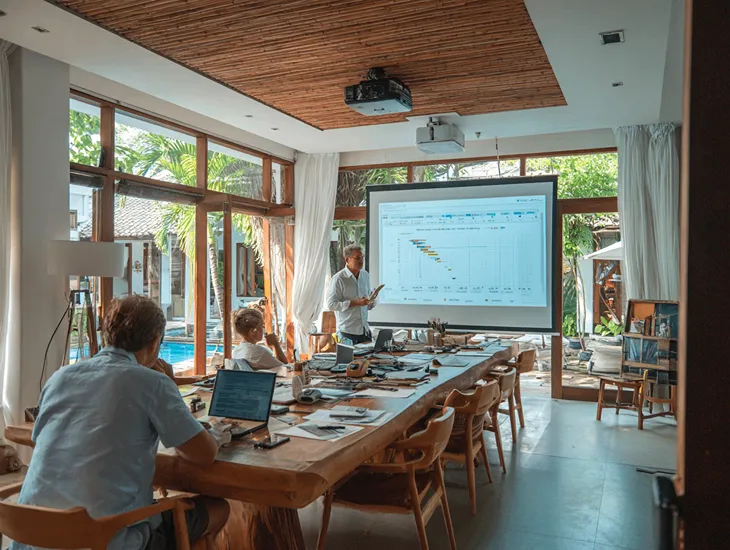
PT PMA finance team in Bali reviewing Coretax DJP annual tax return to classify final income and ensure accurate PPh reporting
November 25, 2025

What Is the Final Income and Taxable Income in the Coretax Annual Return Bali?

Many foreign directors managing a PT PMA in Bali often feel confused when filing the Coretax Annual Tax Return 💼. The term “Final Income Taxable Income” sounds simple, but in practice, it determines how much of your profit is subject to final tax rates under Indonesia’s income tax system.

This confusion usually increases when multiple income types—rental, interest, or construction services—fall under different final PPh categories 📊. 

Without clear classification from pajak.go.id, mistakes can cause underpayment or even double reporting. That’s why many expat business owners experience stress near tax deadlines, unsure if their accountant has applied the correct tax base.

Fortunately, the Coretax DJP system now helps identify each taxable income source automatically ✅. By using consistent mapping of revenue types, companies can align their tax reporting accurately and avoid costly audits. 

This system also reflects Indonesia’s fiscal modernization, which aims to make corporate compliance simpler and more transparent.

Several Bali Accountants clients have successfully adjusted their annual reports after understanding which income is classified as “final” 💡. 

Their experience shows that learning this detail improves cash flow management and investor confidence.

If you’re running a PT PMA or planning to start one soon, reviewing your final income categories through Coretax is a key step toward maintaining full compliance 🌱. 

Professional consultants at Bali Business Consulting can guide you through every reporting phase and ensure your tax data matches official DJP records.

Understanding Final Income Taxable Income in Coretax 💼

When you run a PT PMA in Bali, one of the most confusing parts of the Coretax Annual Tax Return is the term Final Income Taxable Income. It simply refers to income that has already been taxed at a final rate, meaning no further tax adjustments are needed.

Examples include rental income, construction services, and certain interest payments. These types of income are taxed under PPh Final, a system outlined on pajak.go.id. This makes reporting easier since they don’t need to be recalculated when submitting your annual company tax return.

For foreign entrepreneurs, this clarity helps prevent over-reporting or double taxation ✅. Knowing which categories are final allows your accountant to classify revenue correctly inside Coretax DJP reporting, keeping your business compliant and stress-free.

The Coretax Annual Tax Return system is Indonesia’s digital filing platform managed by the Directorate General of Taxes (DJP). It centralizes company reporting, helping PT PMA owners in Bali manage their tax obligations more efficiently.

Under this platform, each income source—sales, dividends, or rent—is automatically categorized for accuracy 📄. This means less manual work, fewer calculation errors, and faster compliance.

However, businesses must ensure all entries match supporting invoices uploaded to the Coretax system. If they don’t, DJP may flag discrepancies that delay refunds or trigger audits. Consulting with experts like Bali Accountants ensures your Coretax DJP reporting matches official tax records seamlessly.

PT PMA director in Bali reviewing final and non-final income on Coretax DJP to ensure accurate annual tax return filing and compliance.Understanding the distinction between final and non-final income is vital for any PT PMA director. Final income is taxed once at a fixed rate—no further tax required. Non-final income, however, is subject to Indonesia’s progressive tax rates and must be included in the overall profit calculation.

For example, revenue from services like consulting or trading is non-final, while rental or construction earnings may be final. You can confirm these details directly through pajak.go.id.

Recognizing this difference helps you file your Coretax Annual Tax Return accurately ⚙️. It also ensures your company remains compliant with Indonesia’s Bali tax compliance guide and avoids unnecessary penalties.

Filing your annual company tax return through Coretax DJP might seem complex, but following a few clear steps simplifies the process.

🔹 Step 1: Log in at pajak.go.id using your company NPWP credentials.
🔹 Step 2: Open the “Form SPT Tahunan Badan” section and select PPh Final for relevant income.
🔹 Step 3: Upload income documents, invoices, and digital certificates carefully.
🔹 Step 4: Double-check every entry before submission to ensure data accuracy.

Doing this properly ensures that your PT PMA final income is reported under the right category. For extra assurance, many companies collaborate with Bali Business Consulting for end-to-end Coretax support ✅.

Even small mistakes in Coretax DJP reporting can cause big problems 😬. Common issues include mixing up final and non-final income, incorrect NPWP input, or mismatched invoices.

Always cross-check your Coretax Annual Tax Return summary before hitting “Submit.” The system allows you to review all taxable income, deductions, and credits. If something looks off, fix it immediately.

For reliable results, many PT PMA owners in Bali hire certified consultants like Bali Accountants to audit their data before submission. It’s a small cost that prevents larger financial stress later.

To stay compliant with Bali tax regulations, foreign business owners should focus on three habits: organization, transparency, and professional assistance.

Keep accurate monthly records 🗂️. Ensure your invoices are uploaded regularly to Coretax, not just at year-end. Always match digital receipts with your annual company tax return data.

Most importantly, rely on official guidance from pajak.go.id and verified experts at Bali Business Consulting. Following a consistent compliance schedule not only reduces stress but also builds credibility with Indonesian authorities.

Hiring a professional accountant or consultant is more than just convenience—it’s risk prevention.

PT PMA Bali companies face stricter compliance standards than local entities. Tax consultants understand how to classify final income tax in Coretax correctly, calculate withholding taxes, and verify all digital certificates.

A consultant can also handle communication with the Directorate General of Taxes during audits 📞. Firms like Bali Accountants and Bali Business Consulting specialize in Coretax DJP reporting, ensuring your records are accurate and legally sound.

Korean entrepreneur in Seminyak consulting with Bali Accountants to correct PT PMA Coretax DJP Annual Tax Return and classify villa rental income under PPh Final 4.Meet Jonathan Kim, a Korean entrepreneur running a small hospitality PT PMA in Seminyak, Bali. In 2024, his business faced confusion over whether villa rental income should be listed as final or non-final in Coretax DJP reporting.

At first, his accountant submitted the Coretax Annual Tax Return incorrectly, triggering a system error. Frustrated, Jonathan sought help from Bali Accountants, who reviewed his income classifications. They confirmed his rental revenue fell under PPh Final 4(2) and guided him through re-filing via pajak.go.id.

Within two weeks, the issue was resolved ✅. His corrected annual company tax return improved cash flow planning and reduced his next audit risk.

Jonathan now advises other foreign entrepreneurs in Bali to consult professionals early rather than wait until deadlines. His story proves that understanding Final Income Taxable Income can transform compliance from chaos into confidence 💡.

It’s income taxed at a fixed rate—no further tax calculation needed.

Check official PPh classifications on pajak.go.id or consult a tax expert.

Yes. Coretax auto-detects certain income types, but human review is still essential.

Your company could face administrative penalties or audit delays.

Need help with your Coretax Annual Tax Return in Bali? Chat with our tax experts on WhatsApp! ✨

Karina

A Journalistic Communication graduate from the University of Indonesia, she loves turning complex tax topics into clear, engaging stories for readers.