

VAT on PMSE in Indonesia: Rules and Compliance Guide
Foreign digital businesses struggle with local tax frameworks. Operating an online platform involves strict compliance regulations. Many companies fail to understand specific rules for digital transactions.
The regulatory landscape creates confusion for international service providers. Without guidance, businesses miss critical registration thresholds. This lack of awareness leads to severe administrative penalties.
Ignoring these mandatory obligations is highly risky. Noncompliance triggers aggressive audits from local authorities. Penalties compound quickly, creating massive financial liabilities for unprepared enterprises.
Your business reputation is at stake when errors occur. Local partners may terminate contracts to avoid associated liabilities. Resolving these issues retroactively consumes tremendous time and resources.
Professional guidance eliminates these dangerous compliance gaps entirely. By implementing structured tax strategies, businesses ensure total regulatory alignment. This approach secures long term operational stability.
Table of Contents
- Understanding the Digital Tax Regime
- Identifying Appointed Tax Collectors
- Current Rates and Invoice Standards
- Payment Timelines and Methods
- Real Story: Securing Digital Tax Compliance
- Quarterly Reporting Obligations
- General Tax and Buyer Interaction in Indonesia
- Practical Steps for Businesses
- FAQs about VAT on PMSE in Indonesia
Understanding the Digital Tax Regime
The government introduced specific regulations for digital supplies. This system targets intangible goods and services provided through electronic channels. It creates a fair environment for domestic and foreign entities.
The primary focus is VAT on PMSE in Indonesia. This mechanism captures revenue from streaming services, software downloads, and online subscriptions. It applies to transactions involving local consumers directly.
Both consumer and business transactions fall under this strict regime. Foreign operators must review their digital sales exposure carefully. Proper classification ensures seamless compliance with all relevant tax policies.
Failing to monitor these frameworks creates substantial operational risk. Companies must understand their specific obligations under current national laws. Professional support helps clarify these complex regulatory boundaries for investors.
Establishing a business presence always requires a thorough policy review. Investors must align their operations with updated ministerial regulations. This alignment prevents unexpected tax assessments during regular financial audits.
Our expert team simplifies this intricate regulatory landscape for you. We provide clear advice on digital product classifications. This proactive strategy keeps your enterprise fully compliant with local laws.
The Ministry of Finance appoints specific digital operators as collectors. These include foreign traders, service providers, and platform organizers. The local tax authority handles the official designation process directly.
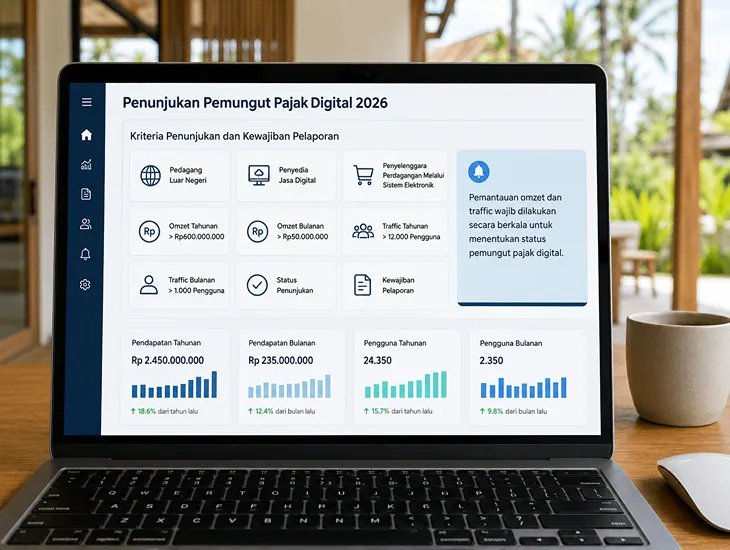
Appointment depends on clear transaction and traffic thresholds annually. Businesses generating over 600 million rupiah annually meet the criteria. Companies with monthly revenues exceeding 50 million rupiah qualify immediately.
Traffic volume serves as another primary appointment trigger for businesses. Platforms exceeding twelve thousand annual users must collect digital taxes. Monthly traffic over one thousand users triggers this obligation.
Many global technology platforms already hold this official status today. Smaller platforms often cross these thresholds without realizing it. Continuous monitoring of user metrics is essential for continuous compliance.
Companies can proactively request appointments from the national tax authority. This voluntary registration demonstrates good faith to regulatory bodies. It streamlines the taxation process for all local digital consumers.
We assist foreign companies in navigating this complex appointment procedure. Our consultants prepare all necessary documentation for official submission. We ensure your status is accurately recorded by the government.

The standard rate for digital taxation in Indonesia is twelve percent. This rate applies directly to the gross consideration of digital products. It excludes other specific local consumption taxes.
Digital sellers must apply this rate to all local subscriptions. This ensures equitable taxation across all electronic service sectors globally. Accurate rate application prevents significant underpayment penalties during audits.
Appointed collectors must always issue clear evidence of tax collection. This documentation acts as the legal equivalent of a tax invoice. It must explicitly display the collected tax amount.
Acceptable documents include commercial invoices, automated receipts, or order confirmations. These records must contain specific identifiers for local corporate buyers. Clear documentation simplifies downstream reporting for your business customers.
Standardizing billing templates is a critical compliance step for sellers. Advisors help configure checkout flows to display mandatory financial disclosures. Proper system setup prevents customer confusion during digital transactions.
Our technical experts audit your existing invoicing software thoroughly. We guarantee your receipts meet all stringent local documentation standards. This attention to detail protects your business from administrative fines.
Tax liabilities trigger immediately upon customer payment for digital goods. When a user purchases a digital service, the collection obligation begins. Platforms must track these exact transaction dates accurately.
Direct transactions require the foreign seller to handle full compliance. The appointed provider collects, remits, and files the necessary funds. This direct mechanism streamlines the revenue collection process significantly.
Platform operators can assume these duties for third party sellers. If the operator holds official appointment status, they manage the remittance. This centralized approach simplifies administration for smaller digital vendors.
Unregistered foreign suppliers create obligations for local buyers instead. Indonesian business customers must self assess the applicable taxes independently. This self assessment mechanism covers transactions falling outside the collector system.
Collected funds must reach the state treasury promptly every month. The absolute deadline is the end of the following month. Late remittals incur automatic administrative interest charges and strict penalties.
We manage these monthly payment schedules on your behalf securely. Our accounting team ensures funds are transferred using approved channels. This dedicated service eliminates the risk of missed payment deadlines.
When Vivi, a 32-year-old from Australia, expanded her fitness application in Sanur, she encountered a major compliance hurdle. Her payment gateway unexpectedly froze her international transfers pending local tax verification.
She had crossed the mandatory revenue threshold without realizing it. Her system did not track user IP addresses properly. This oversight left her completely unregistered and facing potential financial penalties.
Attempting to navigate government portals independently proved impossible. The complex terminology and rigid submission formats stalled her daily operations. She needed immediate expert intervention to restore her payment processing capabilities.
That is when she used our specialized tax service. We quickly mapped her subscriber locations and calculated her exact liability. Our team filed the required appointment notification with the authorities.
We configured her billing software to charge the correct rates. Vivi regained full access to her revenue streams within days. She now relies on our ongoing support for quarterly filings.
Her experience proves that proactive compliance prevents severe business disruptions. Do not wait for a payment gateway suspension to act. Professional setup secures your digital enterprise against sudden regulatory roadblocks.
Remitting funds is only half of the strict compliance equation. Appointed collectors must submit detailed quarterly reports to the government. These documents summarize all transactional data for the preceding three months.
The submission deadline is the final day of the following month. For example, first quarter reports are strictly due by late April. Missing this deadline triggers immediate administrative scrutiny and fines.
Reports must detail the total tax collected and successfully remitted. The authority requires comprehensive supporting information from platform databases. Accurate data matching is strictly required for businesses.
Official appointment letters outline the exact required reporting formats clearly. The tax office provides specific digital channels for these critical submissions. Following these guidelines ensures seamless administrative processing.
Foreign enterprises often find these localized schedules highly confusing initially. Unfamiliar portals create massive operational friction for new market entrants. Professional management eliminates the stress of navigating these rigid government systems.
Our reporting specialists handle all your quarterly filing requirements expertly. We reconcile your platform data with official return formats perfectly. This rigorous process guarantees your submissions are always accurate and timely.

This digital tax is not an entirely new financial levy. It functions as a specialized collection mechanism for standard taxes. It bridges the gap between conventional and modern digital commerce.
Local corporate buyers can often credit this collected tax officially. Proper administrative proof from the foreign vendor is strictly mandatory. This crediting process mirrors standard input tax procedures for domestic entities.
Standard registration thresholds continue to apply to domestic businesses today. Local digital platforms operate under the traditional national taxation framework. The specialized rules primarily target non resident digital service suppliers.
Proper documentation is crucial for corporate purchasers in this environment. Missing invoices mean lost opportunities to reduce overall tax liabilities. Companies must demand compliant receipts from all their international software providers.
Tax consultants expertly map a client regulatory role for accuracy. We determine if you act as a resident buyer or foreign seller. This clarity prevents transactions from falling through systemic legislative cracks.
We optimize your tax position by aligning these diverse mechanisms. Our strategies maximize your available credits while ensuring full compliance. This holistic approach protects your corporate bottom line effectively.
An initial threshold assessment is the critical starting point. Map your consumer base using IP logs and local phone codes. Accurate tracking dictates your entire regulatory strategy moving forward.
Monitor your revenue figures meticulously against the official national benchmarks. Track total transaction volumes to spot sudden digital growth spikes. Proactive monitoring gives you time to implement structural financial changes.
Coordinate with local advisors once criteria are officially met legally. We handle the complex notification process with government offices directly. Securing your official collector status requires precision and expert local insight.
Configure your internal billing architecture to apply precise tax rates. Generate compliant evidence that clearly displays the mandated financial charges. Proper system configuration is the absolute backbone of automated corporate compliance.
Establish strict internal routines for monthly fund remittals without fail. Create automated calendar alerts for all quarterly document submission deadlines. Consistency in these administrative tasks prevents costly late payment fees.
Foreign platforms meeting revenue or user traffic thresholds locally must collect it.
The rate is twelve percent, applied directly to the gross consideration of the digital product.
Appointed collectors must file comprehensive summary reports quarterly, by the following month.
Yes, registered corporate buyers can credit it if they possess valid vendor documentation.
Earning over 600 million rupiah annually or exceeding twelve thousand users triggers it.
Need help with VAT on PMSE in Indonesia, Chat with our team on WhatsApp now!
jmacompany@gmail.com
This author has not yet provided a bio.