

New CRS Rules in Indonesia: How DGT Changes Common Reporting Standards
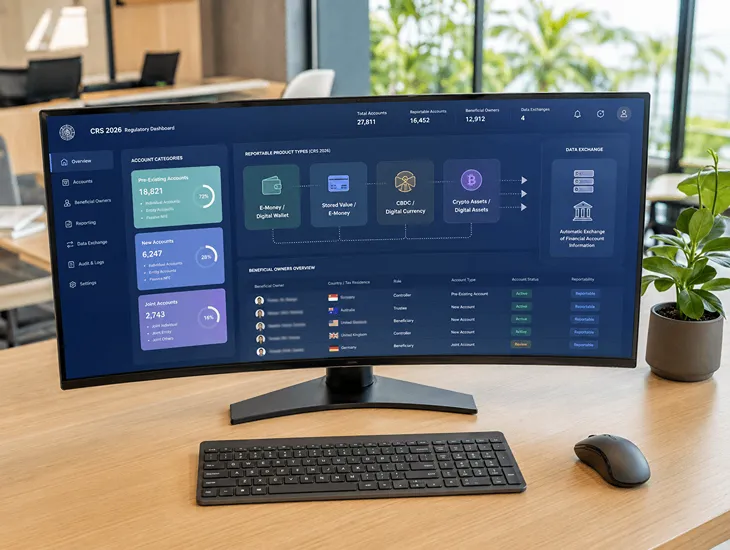
Global account transparency standards are changing. Many residents in Bali assume offshore holdings remain hidden from local authorities. This misconception leads to severe reporting gaps and fiscal liability for both individuals and companies.
The Indonesian tax office is increasing data exchange requirements. If your financial disclosures do not align with international reports, you face immediate scrutiny and potential audits for your company in Bali.
Managing cross-border assets without professional guidance is risky. Inconsistent records trigger system alerts within the national database. These automated notifications often result in heavy administrative fines and accumulated debt for foreign investors.
Families and investors risk losing their financial stability. The transition to New CRS Rules in Indonesia requires meticulous documentation of all offshore interests. Neglecting these updates creates legal instability for your assets.
Our dedicated team simplifies the landscape of international compliance. We help you reconcile foreign account data with your official tax regulations obligations. This protects your capital and ensures long-term viability.
Strategic planning ensures that your move to the island remains administratively clear. We navigate the technical details to secure your residency and investment. Our team manages these tax obligations for your peace of mind.
Table of Contents
- Regulatory Updates and Implementation Timeline
- Technical Framework for Common Reporting Standards 2026
- Expanded Scope of Reportable Accounts
- Upgraded Identification and Due Diligence Procedures
- New Data Fields for Beneficial Owners
- Compliance Obligations for Financial Institutions
- Real Story: Resolving Data Conflicts in Pererenan
- Risks of Non-Compliance and Audit Triggers in Indonesia
- FAQs about New CRS Rules in Indonesia
Regulatory Updates and Implementation Timeline
Indonesia is formally adopting the Amended Common Reporting Standard from the OECD. The Directorate General of Taxes issued specific announcements confirming the 2026 implementation date. This timeline affects data captured throughout 2026.
The government is currently preparing a new Minister of Finance Regulation. This legal framework will replace the older PMK 70/2017 standards. It aligns local law with the updated global transparency requirements.
The official exchange of this expanded data will occur in 2027. This gives financial institutions and account holders a preparation window during 2025. You must review your current holdings to avoid mismatches.
Regulatory bodies have signed an addendum to the multilateral competent authority agreement. This formalizes the commitment of Indonesia to the updated global standards. It ensures reciprocal data sharing with partner jurisdictions worldwide.
The transition involves significant changes to domestic access rules. MoF Regulation 108/2025 updates the list of participating jurisdictions. It also clarifies how the tax authority accesses financial information for auditing.
Staying updated on these announcements is critical for expats in Bali. The list of destination jurisdictions changes annually. We monitor these updates to keep your financial planning accurate and compliant.
Authorities are focusing on the quality of data provided by banks. The reporting formats are shifting to a more complex XML schema. This requires institutions to upgrade their internal IT and KYC systems.
The updated framework introduces several technical modifications to the reporting landscape. It expands the types of products that fall under mandatory reporting. This ensures that newer financial technologies do not escape transparency.
The New CRS Rules in Indonesia now include specified electronic money products within the reporting scope. This covers certain digital wallets used by residents for daily transactions. Central bank digital currencies also face reporting.
Coordination rules are being implemented to prevent duplicate reporting efforts. This is particularly relevant as the government prepares for the crypto-asset reporting framework. Clearer boundaries help avoid administrative confusion for all taxpayers.
Beneficial ownership data is becoming a mandatory reporting field. Financial institutions must identify the controlling persons behind legal entities. This includes detailed roles within non-legal arrangement investment structures and trusts.
The classification of financial accounts is now more granular. Systems must distinguish between pre-existing accounts and new account status. This affects how due diligence is performed on older bank records.
Joint accounts also face more detailed reporting standards. This includes the specific allocation of balances and income among holders. It ensures that shared assets are correctly attributed to each tax resident.
The nature of the relationship between the holder and institution is monitored. Metadata regarding the validation of self-certification forms is now required. This allows the state to track incomplete or invalid declarations.

The definition of a financial account is wider under the latest standards. It captures assets that were previously considered outside the common reporting standard. This includes specific digital currency products held in Indonesia.
Electronic money products that meet certain thresholds are now included. This affects mobile payment providers and fintech platforms used by foreigners. The goal is to close loopholes used for offshore wealth management.
Investment entities that operate as non-legal arrangements are specifically targeted. This includes certain family offices or private investment structures in Bali. They must now disclose their controlling persons more explicitly.
Custodial accounts holding digital assets will face future integration with crypto rules. While separate frameworks exist, the CRS is the foundational layer. It sets the pace for all automated data exchanges.
Insurance products with cash value are subject to tighter scrutiny. The state wants to ensure that life insurance is not used for tax deferral. Specific products will be reported to your home jurisdiction.
Central bank digital currencies represent the newest category of reportable assets. As global finance shifts to digital tokens, the CRS adapts. It ensures that sovereign digital assets remain visible to tax authorities.
We help you categorize your various holdings correctly. Many expats possess a mix of traditional and digital accounts. Understanding which products trigger a report is essential for your annual compliance.
Due diligence procedures for financial institutions are now more rigorous. Banks must follow upgraded standards when identifying reportable account holders. This includes a thorough review of tax residency and TIN data.
Self-certification forms must be collected and validated for every new account. The system tracks whether these documents were received on time. Incomplete forms can lead to account restrictions or immediate reporting.
Pre-existing accounts also undergo a review process under the new rules. Institutions must check for indicators of foreign tax residency in their archives. This includes addresses, phone numbers, or standing instructions.
Identifying the controlling persons of passive entities is a priority. This requires a look-through approach to find the ultimate beneficial owner. It applies to PT PMAs and other corporate structures in Bali.
Standardized due diligence ensures that data shared globally is consistent. It reduces the risk of reporting errors between different jurisdictions. This consistency is vital for the integrity of the exchange system.
Financial institutions must classify their client base accurately. This determines whether an account is reportable or excluded. The list of excluded accounts is narrow and requires technical verification.
Our experts help you prepare the necessary documentation for your bank. We ensure your self-certification accurately reflects your current tax residency. This prevents incorrect reporting to your home country tax authority.
Reporting formats now include more detailed metadata for each account. This includes the role of every equity interest holder in an entity. It identifies who has the power to manage the assets.
The New CRS Rules in Indonesia utilize an XML schema that has been upgraded globally. This allows for the inclusion of joint account balance allocations. It provides a clearer picture of wealth.
TIN validation is now a critical part of the data exchange. If a TIN is missing or invalid, the institution must report it. This triggers follow-up inquiries from the DGT regarding your status.
Metadata regarding the nature of the financial account is mandatory. This helps the tax office understand the liquidity of the reported assets. It also helps in identifying potential high-risk tax avoidance structures.
The roles of controlling persons are explicitly categorized. This includes roles like settlor, trustee, protector, or beneficiary. This level of detail was not required in the earlier versions of CRS.
Self-certification status is a new field that tracks compliance. It shows whether the account holder cooperated with the identification process. This data helps the DGT prioritize their audit efforts effectively.
Understanding these technical fields helps you remain compliant. We review your entity structures to ensure beneficial owners are correctly disclosed. This transparency is the key to avoiding future legal disputes.
Reporting Indonesian financial institutions include more than just banks. It covers custodial institutions, specific investment entities, and insurance companies. They must all adhere to the MoF Regulation 108/2025 guidelines.
Institutions must conduct annual due diligence on all managed accounts. They are responsible for identifying non-resident individuals and their controlling persons. This data is then compiled into the mandatory XML format.
Deadlines for annual reporting are strict and involve technical submissions. Banks must deliver high-quality data to the DGT by the specified date. Failure to comply leads to severe administrative sanctions for the bank.
The DGT acts as the central clearinghouse for this financial data. They receive reports from local banks and share them with partner countries. In return, they receive data on Indonesian tax residents.
Institutions must maintain detailed records of their due diligence processes. These archives are subject to government inspection during technical audits. This ensures that the bank is following the global standard correctly.
Client onboarding processes are being redesigned across the industry. New forms ask for more detailed tax residency information than before. This shift reflects the state’s focus on total financial transparency.
We provide consulting for institutions navigating these complex requirements. Our team helps map products and clients to the new standards. We ensure your reporting systems are ready for the 2026 data.

Alena is a 34-year-old developer from Russia. She started a tech consultancy in Pererenan after moving from Moscow. Alena held several offshore digital wallets from her previous global freelance work.
While reviewing her financial records in Pererenan, Alena identified complexities in the reporting requirements. The regulatory terminology required specialized interpretation. The authorities detected digital assets that were not listed in her local returns.
Alena identified fiscal data mismatches that could trigger audit procedures. She was concerned about administrative freezing of her local accounts. The technical documentation for her specific e-money products was incomplete.
That is when she used our expert compliance service to resolve the issue. We analyzed her offshore holdings against the updated compliance standards. Our team aligned her data correctly.
We updated her self-certification forms and managed the communication with the tax office. Alena successfully avoided fines and secured her residency status. She now focuses on her business with total peace.
Alena maintains regular reviews of her global asset portfolio with our team. This proactive approach ensures her filings remain consistent across jurisdictions. She has established a secure financial foundation for her consultancy.
Non-compliance with these updated standards triggers automated audits immediately. The authorities use advanced software to match international data with your local filings. Discrepancies lead to the issuance of inquiry letters.
These formal letters require a documented response within a short timeframe. You must explain why certain assets or income were omitted. Failure to provide a valid explanation results in formal tax assessments.
Audit risks are higher for individuals with complex entity structures. If your company disclosures do not match your individual reports, officials take notice. This can lead to a multi-year review of your finances.
Incomplete controlling person data is a major signal for authorities. It suggests an attempt to hide the ultimate beneficial owner. This triggers a deeper investigation into your legal and corporate arrangements.
Mismatches between global reports and local filings are the primary trigger. If your foreign bank reports interest that you did not declare, you are flagged. This system is now fully automated.
The cost of defending an audit is often much higher than compliance. Professional representation is necessary to manage these complex disputes. We help you avoid these situations through proactive reporting.
Aligning your global and local reports is the best defense. We conduct a thorough review of your cross-border data before filing. This ensures that you remain safe from automated government scrutiny.
It is an updated global standard for exchanging financial account information securely.
The rules affect data from 2026, with the first exchange in 2027.
Yes, specific electronic money products are now reportable under the expanded scope.
Yes, central bank digital currencies are a new category of reportable accounts.
It refers to the individual who exercises ultimate control over a legal entity.
They match it with your annual returns to identify undeclared offshore assets.
Need help with New CRS Rules in Indonesia, Chat with our team on WhatsApp now!
jmacompany@gmail.com
This author has not yet provided a bio.