

Marketplace Tax in Indonesia: When Platforms Must Collect Income Tax from Sellers
Online merchants face shifting tax regulations. Platforms must adapt to complex guidelines regularly. Keeping up with digital changes remains difficult for foreign operators.
Navigating sudden updates creates compliance uncertainty. Many sellers fail to prepare for automated platform systems. This lack of readiness causes major operational disruptions.
Unprepared businesses risk experiencing capital shortfalls. The tax authority implements strict data validation protocols. These protocols detect financial errors immediately.
Ignoring these shifts damages your commercial standing permanently. Missing deadlines triggers automatic financial sanctions. Resolving structural errors retroactively consumes valuable corporate resources.
Professional guidance resolves these challenges. Our firm structures your financial ledgers to comply with digital frameworks. We protect your enterprise from sudden policy updates.
Table of Contents
- Legal Framework of E-Commerce Income Tax
- Appointment Criteria for Digital Platforms
- Withholding Rates and Gross Turnover Base
- Practical Payment Timelines and Escrow Skimming
- Real Story: Navigating E-Commerce Compliance
- Implications for Domestic and Foreign Sellers in Indonesia
- Policy Postponement and Future Strategic Planning
- Essential Integration Steps for Businesses
- FAQs about Marketplace Tax in Indonesia
Legal Framework of E-Commerce Income Tax
The government established clear parameters for online commercial activities recently. New ministerial decrees define the specific responsibilities of digital intermediaries. These policies regulate transactions across all domestic electronic networks.
Central authorities introduced the Marketplace Tax in Indonesia to formalize small businesses. The policy establishes a structured income tax collection mechanism. It addresses revenue generated through electronic systems.
The directive mandates that digital platform operators assist state treasury collections directly. Appointed entities act as official withholding agents for the revenue office. This framework standardizes national e-commerce monitoring.
Understanding these legal foundations is critical for digital platforms. The regulations affect both domestic operators and international enterprises targeting local consumers. Professional compliance support ensures adherence to all legislative changes.
Keeping your business aligned with these policies prevents sudden regulatory friction. Our legal experts evaluate how shifting frameworks impact your corporate structure. We guide your enterprise through every legislative update smoothly.
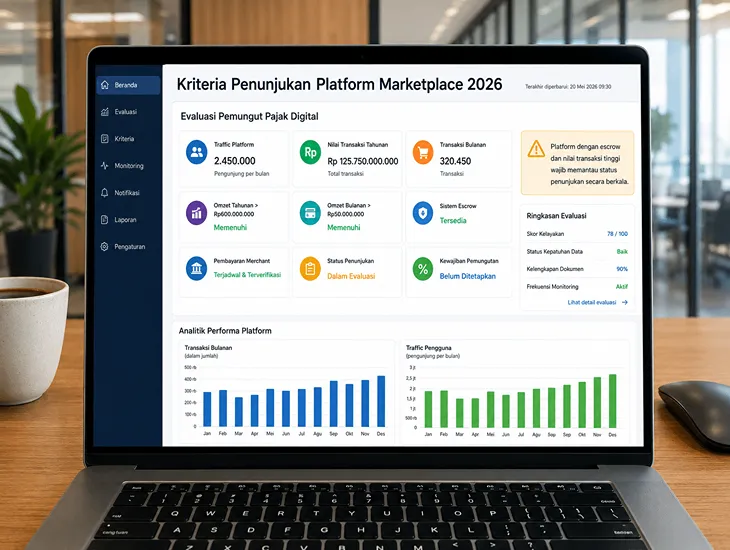
Digital organizers face mandatory appointments based on clear operational metrics. The tax office evaluates platform traffic and transaction values systematically. Meeting these criteria triggers official collection obligations.
Platforms utilizing escrow systems to manage customer payments face immediate scrutiny. If annual transactions exceed 600 million rupiah, appointment becomes mandatory. Monthly revenues over 50 million rupiah trigger the same clause.
User traffic volume serves as another primary administrative indicator for regulators. Platforms attracting more than twelve thousand annual users must collect taxes. Monthly traffic over one thousand users enforces this rule.
Appointed platforms must implement automated calculation software within one month. The designation applies to both domestic organizers and foreign entities. Tracking these user metrics is essential for continuous compliance.
Our consulting firm assists digital platform operators during this registration process. We analyze your traffic data to determine your specific regulatory exposure. We manage all official communication with the authorities.
Regulators continuously refine these baseline traffic metrics over time. Platforms must establish proactive monitoring dashboards to track user growth spikes. Early notification simplifies the official designation process significantly.

The designated collection rate applies to the gross turnover of merchants. The framework implements a flat five-tenths percent income tax deduction. This deduction targets revenues earned through digital portals.
The calculation base excludes value added taxes and luxury goods levies. The system skims the tax directly from the transaction value. Merchants receive their funds after this automated deduction occurs.
Certain micro enterprises enjoy specific exemptions under the current framework. Sellers with annual revenues below 500 million rupiah can apply for relief. Providing a valid sworn declaration is mandatory for this exemption.
Larger commercial entities face more complex tax reconciliation requirements. The interaction between different revenue thresholds requires meticulous corporate bookkeeping. Professional accounting ensures your business utilizes available exemptions correctly.
Miscalculating the gross transaction base leads to significant financial discrepancies. Our accountants standardize your internal ledgers to ensure perfect data alignment. We protect your profit margins through precise calculation methodologies.
Verifying merchant declaration documents requires strict internal control procedures. Platforms face massive liabilities if they falsely exempt non-qualifying accounts. Our compliance reviews protect your system from these operational oversight risks.
Tax liabilities trigger the exact moment payment enters the platform system. The withholding occurs before funds leave the secure intermediary escrow account. This automated mechanism ensures immediate revenue capture for the state.
Appointed platform operators must remit collected funds to the state treasury monthly. The absolute deadline is the fifteenth day of the following month. Late transfers incur automatic administrative interest charges.
Platforms must also submit a unified periodic income return regularly. The filing deadline is the twentieth day of the subsequent month. Accurate data matching is strictly required for these electronic submissions.
This structural skimming under the Marketplace Tax in Indonesia affects cash flow. Businesses must adjust their financial forecasting to accommodate these automated deductions. Proper cash management prevents operational liquidity issues.
We help platforms design automated ledger reconciliation workflows seamlessly. Our technical team configures your payment gateways to handle tax collections accurately. This support minimizes the administrative burden on your internal staff.
Managing these periodic filing cycles demands consistent professional oversight. Our financial advisors align your payment records with state documentation requirements perfectly. We reduce the stress of monthly reporting obligations completely.
When Kimberly, a digital merchant from Australia, first arrived in Pererenan, she struggled with local e-commerce registration requirements. Her online clothing store quickly expanded across several local digital platforms.
She assumed her small business scale exempted her from complex national regulations. However, her multi-platform sales crossed the mandatory tracking thresholds unexpectedly. Her lack of structured records created massive corporate tax risks.
During an auditing phase, her marketplace payment account faced immediate suspension. The system required a certified tax identification number to release her withheld revenues. This operational freeze halted her entire distribution chain.
She tried analyzing the complex decrees independently but encountered severe language barriers. She needed an immediate professional accounting solution to address the discrepancy and restore her business functionality.
That is when she used our expert compliance service to resolve her data crisis. Our team quickly organized her transaction histories and secured her tax registration. We successfully reactivated her corporate merchant accounts.
Kimberly now manages her online shop with total operational clarity. Our ongoing accounting services ensure her monthly data lines up with official expectations. Professional financial management optimized her business operations.
Digital merchants must realize that automatic withholding does not eliminate reporting duties. Sellers must maintain active tax identification numbers to operate legally. Annual reporting remains completely mandatory for all enterprises.
Foreign business owners operating a corporate entity face strict financial disclosure rules. The automated platform deductions function as an advance payment for larger corporations. These amounts must be reconciled during yearly filings.
Incorporating these platform slips into your corporate bookkeeping requires absolute precision. Lost documentation results in double taxation during annual audits. Merchants must store all electronic receipts securely for future verification.
The current Marketplace Tax in Indonesia impacts pricing strategies directly. Operators must factor the half-percent withholding into their profit margin calculations. These adjustments secure your long-term commercial viability.
Our consulting firm structures complete financial reporting systems for international merchants. We align your multi-platform sales data with local corporate accounting standards. This thorough oversight protects your commercial investments.

The Ministry of Finance recently postponed enforcement of the Marketplace Tax in Indonesia due to economic concerns. This delay grants digital merchants temporary breathing room to optimize their internal compliance operations.
This temporary postponement creates a strategic window for forward-thinking enterprises. The legal framework exists on paper and will activate unexpectedly. Businesses must utilize this period to update their compliance infrastructure.
Failing to prepare for the eventual activation causes massive systemic risks. Platforms will switch on the withholding logic automatically when authorized. Unprepared merchants will experience sudden cash flow adjustments.
Scenario-based planning is essential for businesses operating across multiple digital networks. You must model how automated deductions affect your quarterly operational forecasts. Proactive planning eliminates future financial surprises.
Our team monitors these ongoing policy shifts from the tax office constantly. We provide up to date advisories regarding enforcement timelines. We ensure your enterprise remains prepared for any sudden regulatory implementation.
Utilize this current enforcement delay to strengthen your accounting frameworks. Strategic preparation guarantees a seamless transition when the postponement concludes officially. Contact our specialists to design your corporate readiness roadmap today.
Digital platforms must analyze their current transaction volumes against official benchmarks. Upgrading your payment architecture to support automated withholding is a critical necessity. Proper technical preparation prevents future compliance penalties.
Online merchants must ensure their profile accounts link to valid tax identifiers. Verifying your annual turnover dictates your eligibility for small business exemptions. This verification streamlines your automated marketplace interactions.
Reconciling monthly platform statements with internal banking records remains vital. Our accounting specialists design integrated workflows that automate data collection. This systematic approach guarantees total accuracy across all financial reports.
Do not wait for full policy enforcement to secure your digital operations. Implementing structured financial controls today protects your enterprise from future audits. Contact our professional office to establish your custom transition strategy.
Our integrated compliance solutions protect your commercial interest through every market cycle. We handle data mapping, registration tracking, and continuous regulatory reporting smoothly. Partner with our team to achieve operational excellence.
The platform automatically withholds a final income tax of 0.5% from gross turnover.
Yes, sellers earning under 500 million rupiah annually can apply for exemption letters.
Enforcement is currently postponed by the ministry due to regional economic concerns.
Yes, any local or foreign corporate entity selling via marketplaces must comply.
Appointed platforms holding funds in escrow accounts with high user traffic collect it.
Need help with Marketplace Tax in Indonesia, Chat with our team on WhatsApp now!
jmacompany@gmail.com
This author has not yet provided a bio.