

Gold Bullion Tax Rules in Indonesia: How New 0.25% Income Tax Works

Foreigners often invest in precious metals to protect their wealth. The financial landscape shifts rapidly with new government regulations. Investors struggle to track these ongoing legal changes.
Navigating Gold Bullion Tax Rules in Indonesia requires deep understanding. The government introduced complex dual regulations in August. These updates confuse many foreign investors immediately.
Misunderstanding these updates creates severe financial risks for businesses. Authorities track transactions actively through domestic financial institutions. Unreported assets trigger intense scrutiny and heavy corporate audits.
Calculating exact levies becomes difficult without professional guidance. Simple filing errors lead to massive financial penalties. The official tax regulations demand strict accuracy for asset declarations.
Professional advisors simplify this compliance process. We analyze your global asset portfolio to ensure legal alignment. Proper planning prevents devastating financial losses easily.
Our experts manage your annual filing requirements. You secure your investments against sudden regulatory penalties. We protect your financial future in Indonesia efficiently.
Table of Contents
- Understanding the Dual Taxation Framework
- Identifying Who Pays the New Levy
- Recognizing Licensed Financial Institutions
- Exemptions for Specific Buyer Categories in Indonesia
- Real Story: Resolving Asset Declarations in Sanur
- Reporting Precious Metals in Annual Returns
- Calculating Capital Gains from Sales
- Import Levies and Customs Obligations
- FAQs about Gold Bullion Tax Rules in Indonesia
Understanding the Dual Taxation Framework
The government implemented major taxation reforms recently for investors. These changes took effect in August of this year. Two parallel regulations now govern all precious metal transactions.
The first regulation establishes a specific withholding mechanism. It targets transactions handled by licensed financial institutions. This introduces a mandatory percentage collected upon purchase.
The second regulation outlines specific exemptions for retail consumers. It protects everyday buyers from unnecessary financial burdens. The government designed this to maintain retail market stability.
These parallel rules operate simultaneously across the entire country. Understanding their interaction is vital for maintaining corporate compliance. Investors must differentiate between institutional and retail transactions clearly.
Our experts monitor these legislative updates constantly for you. We interpret complex government decrees for our foreign clients. Proper guidance keeps your investment strategy legally sound.
Proper compliance requires vigilance from your corporate finance team. Adapting early prevents operational bottlenecks later in the year. We streamline this transition for your business seamlessly.
The new percentage applies only to very specific scenarios. Transactions involving licensed financial institutions face direct taxation. The institution pays this levy upon acquiring the metal.
Individual consumers face different rules when selling their assets. Sales exceeding ten million Rupiah trigger the new levy. The purchasing institution withholds this specific amount automatically.
Sales below this specific threshold remain entirely tax-free. Small retail transactions do not incur this specific withholding. This exemption protects minor investments and casual individual sellers.
Everyday consumer purchases remain completely exempt from this rule. Buying from traditional shops or digital platforms incurs zero withholding. The government confirmed this protection publicly for citizens.
Understanding these regulations prevents costly misunderstandings. Many investors panic unnecessarily over misleading media headlines. We provide accurate assessments of your financial liabilities.
Understanding Gold Bullion Tax Rules in Indonesia is essential. You must apply the correct percentage to your transactions. We calculate these obligations perfectly to ensure total compliance.
Specific financial institutions handle these newly regulated transactions. The financial services authority licenses these entities directly. They operate specialized precious metal businesses legally and securely.
These institutions offer secure savings accounts and financing options. They also manage trading and custodial services for investors. Currently, only two major entities hold this specific license.
Market adoption remains slow due to complex regulatory requirements. Obtaining this specific license demands significant capital reserves. The strict application process deters many potential corporate applicants.
Foreign investors often wonder about utilizing these secure institutions. The laws do not explicitly exclude foreign corporate entities. However, no precedent exists for foreign ownership yet.
We help clients navigate relationships with these licensed entities. Utilizing official channels ensures transparent transaction records. Clear records simplify your annual reporting obligations significantly.
Investors should verify the license status of their chosen institution. Unlicensed trading creates severe legal liabilities for your company. We provide background checks on financial partners for your security.
The government exempts several buyer categories from this levy. End consumers form the largest protected group in Indonesia. They purchase precious metals without facing this specific withholding.
Small and medium enterprises also qualify for these exemptions. They must hold a specific final tax status beforehand. The system verifies this status digitally before completing transactions.
Taxpayers holding official exemption certificates bypass this levy completely. Digital trading platforms and the central bank also enjoy exemptions. These entities operate outside the new withholding requirements.
Most of these categories require no extra administrative paperwork. The system grants the exemption automatically during the transaction. This streamlines the purchasing process for eligible corporate buyers.
Managing these exemptions requires proper corporate classification and documentation. We ensure your business entity qualifies for available relief. Proper structuring optimizes your investment strategy in Indonesia.
Our advisory services verify your exemption status before transactions. This prevents unnecessary withholding on your valuable commercial purchases. We protect your corporate cash flow efficiently.
Meet Jeremy, a forty-five-year-old financial analyst from the UK. He operates an investment consultancy in Sanur. Last year, he relocated his personal precious metal holdings from a vault in London.
He imported the physical assets into the country legally through customs channels. However, he struggled when declaring the historical acquisition values on his annual individual tax return.
Jeremy computed his asset costs using current market values instead of the original prices. This error artificially inflated his declared net worth. The regional tax office flagged the mismatch for an audit.
The formal audit notification created significant operational complications for his firm. He needed an immediate expert solution to verify his documentation. He contacted our tax advisory team for professional assistance.
Our specialists cross-referenced his original London purchase receipts carefully. We applied the correct historical exchange rates matching his actual investment dates. We drafted a comprehensive revised annual filing.
The revenue authority reviewed and accepted our corrected asset declaration records completely. Jeremy resolved the audit discrepancy without facing tax evasion penalties. Our ongoing support secures his wealth management.
Investors must declare precious metals as formal taxable assets. You report these holdings in your annual individual return. The filing deadline falls in March of the following year.
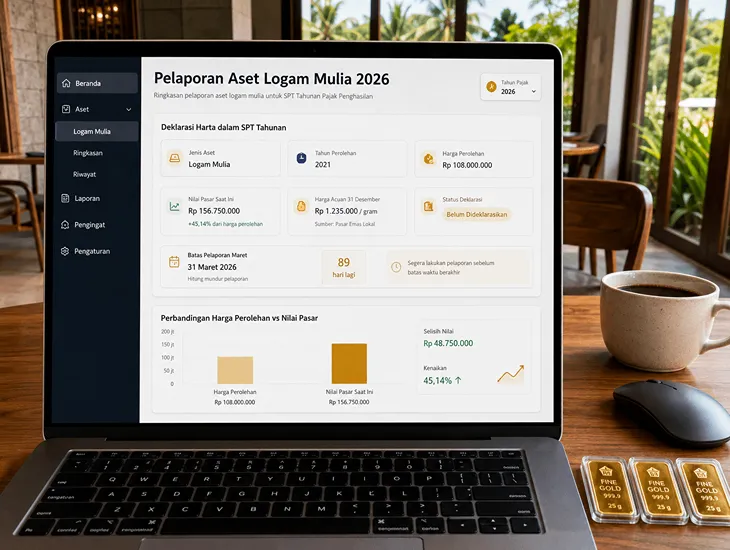
The reporting system requires specific purchase details from you. You must input the acquisition year and the original price. The system also demands the current market value.
Calculating this market value requires an official reference point. You must use the published rate from December thirty-first. The state mining company provides this official benchmark daily.
Foreign currency purchases demand careful conversion calculations for accuracy. You must convert the purchase price using historical exchange rates. Using the current rate creates dangerous valuation errors.
Failing to report these assets triggers severe legal consequences. Unreported wealth leads to aggressive regulatory audits for investors. We manage your asset reporting efficiently to prevent this.
Digital gold investments require identical reporting procedures for compliance. You must list digital balances using the official year-end redemption price. We consolidate all physical and digital holdings accurately.

Selling precious metals for profit generates taxable domestic income. The revenue authority treats these profits as standard capital gains. You must declare these earnings in your annual return.
These profits face progressive taxation rates based on income. The system adds them to your total annual domestic earnings. This combined figure determines your final financial liability.
Holding the asset without selling generates no immediate liability. Annual appreciation remains untaxed until a sale actually occurs. You only report the increased value in the asset section.
Unreported profits carry massive financial penalties for individual investors. The authorities charge steep fines on unpaid capital obligations. They trace transactions easily through licensed institutional records.
Calculating capital gains requires extreme precision and detailed records. We reconcile your sales receipts with official reporting forms. Our thorough review prevents automated mismatch flags entirely.
We calculate your exact capital gains carefully and accurately. This ensures you pay only the legally required amount. Professional support protects your investment returns efficiently.
The new regulations impact imported precious metals significantly. Customs officials collect a percentage upon port entry. This applies to all inbound shipments immediately and strictly.
Previous rules allowed exemptions for export-oriented jewelry manufacturers. The new mandate eliminates these specific exemptions entirely. Importers must pay the levy regardless of their final intention.
This payment is completely non-refundable for corporate importing businesses. Manufacturers cannot reclaim it even after exporting finished jewelry. This increases operational costs for international traders.
Transitional provisions exist for older exemption certificates currently. However, the authority no longer issues new certificates for imports. Businesses must adapt to these strict new customs rules.
Cross-border wealth transfers require careful logistical planning and compliance. Bringing personal assets requires strict adherence to formal customs declarations. We advise clients on the safest importation strategies.
Proper valuation during importation prevents costly customs clearance delays. Accurate paperwork ensures smooth clearance at the national border. We coordinate with logistics providers to maintain perfect compliance.
No, everyday consumer purchases remain entirely tax-free under the new regulations.
The levy only applies when you sell more than ten million Rupiah to a licensed bullion bank.
You must declare them as official assets in your annual individual tax return every March.
Inheritance is not taxable, but you must report the items as assets with current market values.
No, the import percentage is strictly non-refundable even for export-oriented manufacturers.
Need help with Gold Bullion Tax Rules in Indonesia, Chat with our team on WhatsApp now!
jmacompany@gmail.com
This author has not yet provided a bio.