

Indonesia Corporate Tax 2026 – Legal filing requirements, PT PMA compliance, and tax regulations for WNAs
May 25, 2026

Foreign Investors in Indonesia: A Complete Guide to PT PMA
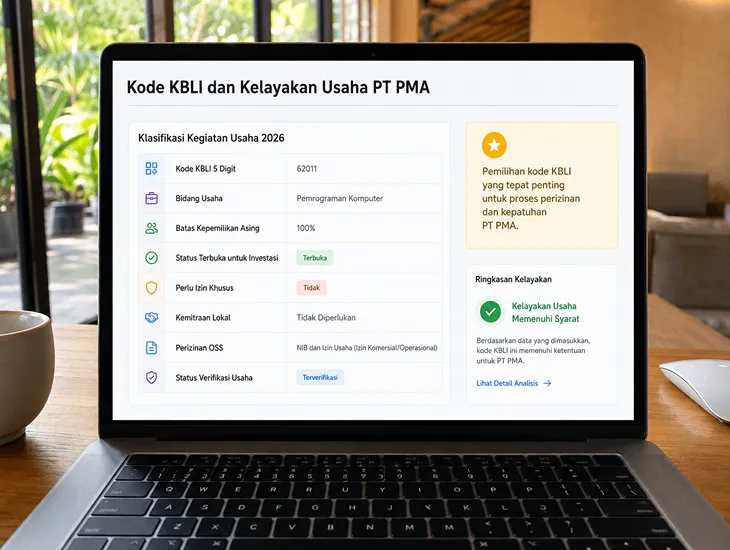
Establishing a commercial presence across the archipelago presents immediate regulatory friction. International business founders often struggle to interpret complex corporate compliance frameworks without clear guidance.

Navigating specific company laws remains a steep barrier for incoming capital. Many entities face operational delays simply because their initial structural choices do not align with domestic legal expectations.

Misaligned corporate setups face aggressive institutional audits and severe financial penalties. Failing to secure the correct business classifications quickly blocks essential logistical pipelines and drains vital enterprise working capital.

For Foreign Investors in Indonesia, operating under flawed legal assumptions compromises organizational security across the active provincial markets. These persistent administrative errors block operational growth and jeopardize immigration privileges.

Fortunately, aligning your setup with official tax regulations eliminates these corporate risks. Implementing a fully transparent PT PMA structure guarantees robust protection and unlocks sustainable commercial growth lanes.

Our specialized advisory firm handles your entire corporate configuration process seamlessly. We synchronize your registration records, bookkeeping routines, and ongoing statutory submissions to safeguard your valuable consumer portfolio continuously.

Legal Framework of PT PMA Companies

A limited liability company funded by direct international capital serves as the primary legal structure for offshore enterprises. This vehicle allows foreign entrepreneurs to hold up to one hundred percent company equity safely.

The statutory architecture demands a clear internal governance model to ensure transparent operations. Every entity must appoint at least two distinct shareholders alongside a designated director and a supervising commissioner.

Foreign individuals can legally occupy corporate leadership positions to oversee their investments directly. However, local regulations restrict international directors from managing internal human resource departments to protect domestic employment structures.

Utilizing alternative corporate structures like sole proprietorships or local partnerships remains entirely prohibited for international capital. The state strictly enforces the limited liability format to regulate cross-border corporate activities cleanly.

Our legal team structures your corporate foundation to satisfy these initial organizational criteria flawlessly. We verify your shareholder distributions to build a balanced, fully compliant corporate entity from day one.

Managing corporate records cleanly prevents operational friction down the line. Our legal services protect your initial configuration to ensure your entity remains robust across the active provincial marketplaces.

Company Establishment Indonesia 2026 – KBLI classification, foreign equity limits, and OSS licensing for WNAsCommercial activities must map directly to standardized five-digit classification codes before initialization. These specific codes determine the maximum percentage of international equity permitted within your selected business sector.

The state maintains a positive investment framework that keeps most commercial fields fully open to international capital. However, specific strategic sectors require local joint-venture partnerships or special ministerial permissions.

Selecting an incorrect classification code creates immediate friction during the licensing phase. Mismatched entries generate automatic systemic rejections, halting your corporate onboarding process across the central registration networks.

Investors must analyze these regulatory boundaries thoroughly before executing any official corporate deeds. Clear foresight prevents operational bottlenecks and ensures your business operations remain legally sound across all active provincial borders.

We guide your executive team through the complex business classification matrices to identify the exact code matches. Our meticulous verification process guarantees your enterprise secures the correct operational approvals efficiently.

Evolving investment rules demand ongoing tracking to catch sudden sector restrictions early. Keeping your structural records updated protects your ongoing licensing approvals from unexpected municipal interventions completely.

Central investment boards enforce strict capital guidelines to protect small domestic enterprises from overwhelming international competition. Large-scale corporate setups must maintain a total investment plan exceeding ten billion rupiah per sector.

This baseline investment plan excludes values related to land and buildings used for operations. Meeting this threshold requires that at least two and a half billion rupiah must be fully paid up.

Qualifying shareholdings unlock access to expedited immigration privileges and limited-stay permits. Shareholders who maintain substantial individual stakes can secure long-term stay permits to manage local corporate operations.

Attempting to utilize under-capitalized nominee setups or hidden side agreements directly violates state investment laws. These superficial configurations are legally null and void, exposing both participating parties to immediate regulatory asset seizures.

Demonstrating true capital injection remains a fundamental condition for corporate longevity. Clear banking records proving capital transfers are continuously inspected during routine institutional compliance reviews.

Our financial consultants model your capital allocation plans to satisfy these strict investment board thresholds. We supervise your banking setups to ensure your capital execution records remain flawlessly audit-ready.

Establishing your corporate vehicle requires a systematic progression through centralized administrative channels. The process begins with drafting a formal deed of establishment before a licensed local notary.

The notary submits these signed constitutional documents directly to the Ministry of Law and Human Rights. The ministry then issues an official decree ratifying the corporate entity as a valid legal person.

Following state ratification, the new enterprise must secure its unique corporate taxpayer identification number. This corporate tax profile must be registered electronically to authorize subsequent financial transactions across the provinces.

Management teams then utilize the state online single submission portal to generate a primary business identification number. The system evaluates your sector risk level to issue the appropriate operational standards automatically.

Finalizing post-licensing requirements includes securing local location approvals and relevant environmental certifications. Completing these sequential milestones takes approximately two to six weeks, depending on document readiness and sector complexities.

We coordinate this entire administrative lifecycle as a single unified project to eliminate costly processing delays. Our team handles every corporate registry link to deliver a completely operational business setup smoothly.

Eligible corporate setups can utilize a preferential final tax regime to lower their initial operational overhead. Qualifying micro and small enterprises enjoy a reduced half-percent tax rate on gross annual turnover.

This preferential corporate tax ceiling applies exclusively to gross revenues under four point eight billion rupiah. Furthermore, corporate entities can only access this specific incentive for a maximum of three consecutive fiscal years.

After this initial three-year grace period expires, the enterprise must transition to standard corporate taxation. This structural shift requires paying an eleven percent tax rate calculated directly against net corporate profits.

Managing this tax transition requires calculating specific monthly advance installments based on your previous year’s performance. Financial teams must utilize designated payment codes to process these recurring monthly installments accurately.

Modern compliance mandates require tracking all tax obligations via the newly updated centralized digital tax database. Transitioning your accounting routines early prevents costly calculation shocks when your preferential period officially concludes.

Our tax planning specialists model your multi-year corporate obligations to manage this transition phase flawlessly. We structure your bookkeeping to optimize your tax position before entering the full corporate tax bracket.

PT PMA Compliance Indonesia 2026 – Corporate tax reporting, bookkeeping setups, and financial audits for WNAsWhen Richard, a consumer logistics founder from Canada, first arrived in Pererenan, he struggled with complex corporate bookkeeping requirements for his regional setup. He faced an immediate administrative bottleneck while evaluating his multi-year corporate accounts.

His internal accounting coordinators mistakenly assumed the preferential half-percent turnover tax rate would continue automatically into his fourth operational year without preparing standard financial statements. This created major hidden liabilities.

The newly launched digital tax platform detected this filing discrepancy immediately during a routine automated system cross-reference. The central database flagged his profile, initiating a comprehensive corporate tax audit.

This sudden tax dispute threatened his operational liquidity and severely disrupted his ongoing warehouse expansion plans. The technical error caused immense operational stress for his leadership team across the provinces.

He utilized a professional corporate advisory service to restructure his complete accounting history in accordance with state criteria. We compiled a verified reporting package and resolved his back-tax exposures within days.

Richard resumed his logistics operations under a fully monitored compliance schedule. This systematic alignment protected his consumer assets and secured his corporate longevity against future unforeseen institutional shocks.

Operating a valid enterprise demands rigorous adherence to recurring reporting calendars across the archipelago. Corporate teams must process monthly employee tax withholding filings alongside specialized cross-border service tax obligations.

Value-added tax reporting remains mandatory for all enterprises registered as taxable business entities. Financial managers must execute these digital filings through the central portal by strict monthly deadlines to avoid immediate institutional fines.

Furthermore, corporate groups must submit regular investment activity reports to the investment ministry electronically. These declarations prove your business is actively implementing its stated ten billion rupiah development plan over time.

For Foreign Investors in Indonesia, maintaining continuous transfer pricing documentation is an absolute statutory rule. Related-party transactions, including international management fees, face intense scrutiny during routine corporate accounting evaluations.

Our complete corporate compliance service handles these complex monthly and annual reporting workflows seamlessly. We track every regulatory deadline and specific payment code to ensure your operations remain completely unassailable.

Timely data synchronization helps corporate operators clear state evaluations effortlessly. Maintaining an audit-ready financial profile guarantees total corporate security throughout your ongoing business operations across the archipelago.

Utilizing nominee structures to bypass foreign equity restrictions represents a dangerous, high-risk operational pitfall. Investment laws explicitly prohibit side agreements where individuals hold corporate shares on behalf of another party.

State auditors leverage advanced data matching systems to identify artificial shell corporations rapidly. If an arrangement is deemed under-capitalized, your operational licenses and immigration privileges can be revoked retroactively.

Another critical mistake involves severe data discrepancies between annual tax filings and formal financial statements. Inconsistent disclosures across state databases generate immediate institutional flags, triggering exhaustive corporate bookkeeping audits.

Poor transition planning between the preferential tax phase and the standard tax bracket also triggers deep investigations. Failing to preserve clear expense receipts guarantees massive underpayment assessments during routine revenue reviews.

Professional tax advisory support shields your commercial investments from these disruptive administrative oversights entirely. We correct hidden bookkeeping vulnerabilities before state revenue officers initiate formal corporate review proceedings.

Secure your corporate governance today to protect your long-term wealth building goals confidently. Partnering with our specialized local firm establishes a bulletproof foundation for your ongoing business development.

Do not wait for a formal clarification letter to secure your corporate accounts. Establishing transparent bookkeeping structures today protects your long-term organizational legacy against sudden state scrutiny.

Foreign Investors in Indonesia must inject two point five billion rupiah paid-up capital.

This preferential micro-enterprise framework applies for three consecutive tax years.

Yes, many sectors permit one hundred percent international ownership under current rules.

The baseline standard rate is eleven percent calculated against net business profit.

Nominee setups are legally null and void, triggering immediate regulatory sanctions.

Need help with Foreign Investors in Indonesia, Chat with our team on WhatsApp now!

jmacompany@gmail.com

This author has not yet provided a bio.