
Export Activities and Customs in Indonesia 2026 – Trade filing and PT PMA compliance rules for WNAs
May 25, 2026

Export Activities and Customs in Indonesia: Understanding Their Relationship and Procedures
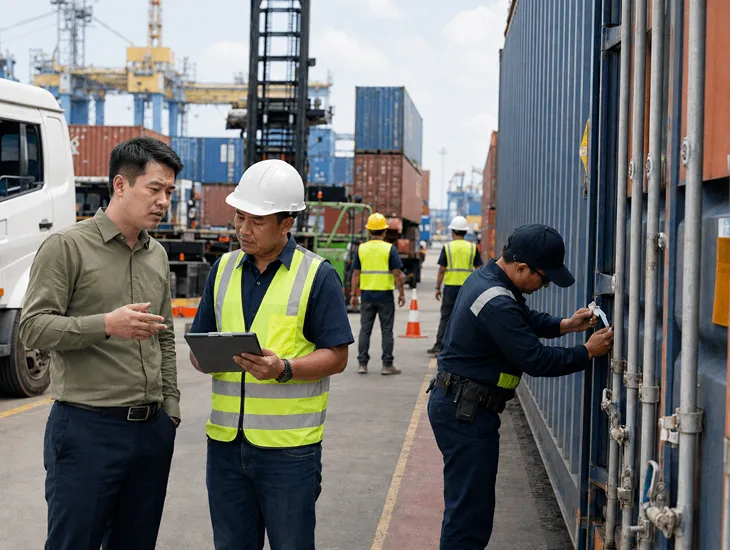
Global trade requires navigating intricate checkpoints. Foreign investors often fail to realize that cross-border shipping is tied directly to domestic fiscal scrutiny.

Navigating logistics without guidance introduces immediate friction. Outdated documentation cannot shield your enterprise from intense oversight by central maritime boards.

Ignoring these parameters creates severe liabilities. Customs officers can impound shipments, causing supply chain delays and destroying your commercial profit margins.

Structural errors in paperwork trigger automated database discrepancies. These mismatches expose your local organization to aggressive corporate audits from revenue offices.

Fortunately, proper protocols ensure data aligns with official tax regulations. Secure tracking protects your commercial assets from unexpected administrative fines.

Our team helps you navigate the regulatory framework governing Export Activities and Customs in Indonesia. We build robust bookkeeping workflows to secure your shipments.

Legal Supervision of Outbound Commodities in Indonesia

The Directorate General of Customs and Excise shares responsibility with trade ministries to supervise all commodities leaving the country. This oversight ensures domestic businesses comply with strict statutory trade requirements.

Outbound shipping activities operate as formal regulatory interfaces where state officers inspect product safety metrics. Companies must verify their documentation patterns before attempting to move inventory through maritime cargo ports.

Failing to satisfy these legal parameters results in immediate logistics delays and potential license revocations. Government administrators cross-check transport files against active commercial codes to maintain market security across provinces.

For an expanding enterprise in Bali, navigating cross-border shipping protocols serves as an essential corporate protection mechanism. Every product line must be vetted against current ministry decrees to avoid unexpected processing disruptions.

Our advisory firm analyzes your commercial inventory to guarantee alignment with active trade directives. We establish clear corporate channels that keep your outbound logistical workflows completely safe from state intervention.

Maintaining transparent communications with maritime authorities avoids unexpected container holdings at border junctions. Our experts monitor custom declarations continuously to support uninterrupted international distribution routines for your firm.

Indonesia Corporate Tax 2026 – Export registration, PT PMA trade compliance, and customs filing
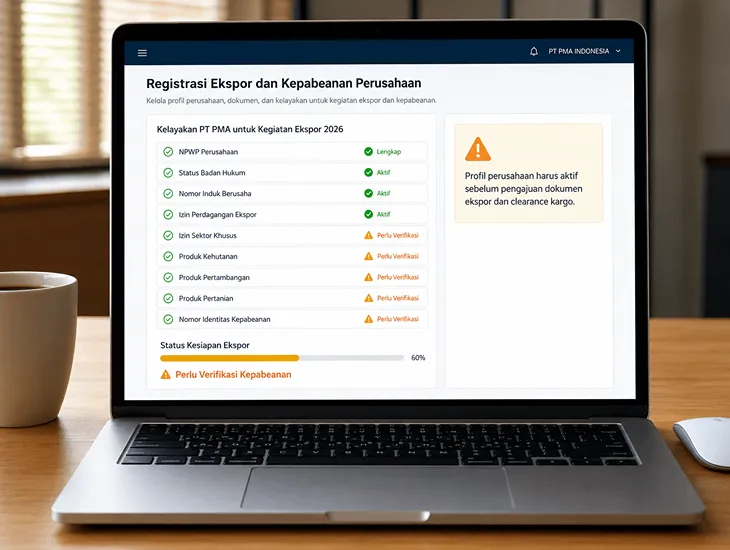
Exporters must secure a valid tax identification number and formal legal business status before conducting trade. Acceptable corporate structures include a limited company setup or an international joint-venture framework.

The Online Single Submission system issues a centralized business identification number to qualified corporate applicants. This primary registration code activates basic eligibility permissions for international commercial trading activities across the archipelago.

Certain specific economic sectors require supplementary trade permits from specialized ministries before shipping items. Forestry products, mining extractions, and agricultural deliverables face independent processing criteria that demand meticulous compliance filing.

Companies must also register for a dedicated customs identification number directly through the central excise authority. This specific code permanently activates your digital corporate profile within the electronic cargo clearance network.

Our business consulting team manages these multi-tiered registration procedures end-to-end for foreign-owned corporations. We secure your corporate credentials swiftly so your brand maintains full legitimacy within the local market.

Verifying your regulatory standing minimizes data discrepancies across municipal classification systems during annual updates. We establish clean operational entities that allow your management team to execute international trade contracts smoothly.

The formal clearance process relies heavily on a standardized electronic document known as the goods export declaration. Exporters must submit this mandatory digital filing directly into the centralized customs database system.

Accompanying paperwork must validate every financial detail listed within your primary declaration folder. Meticulous preparation requires a verified commercial invoice, an itemized packing list, and an official ocean bill of lading.

Specific product categories demand technical health declarations or certificate of origin documentation from trade boards. These verified attachments confirm your goods satisfy international import treaties and destination country entry laws.

Administrative guidelines dictate that declarations must be uploaded at least seven days before cargo departure. This structural timeframe allows inspection teams to perform risk-profiling routines and schedule physical container verifications.

Submitting incorrect transactional information or failing to file declarations triggers severe statutory enforcement actions. Legal penalties include heavy corporate fines and potential imprisonment terms under national maritime legislation.

Our bookkeeping solutions organize your corporate transport records to meet strict cargo submission schedules effortlessly. We guide your administration through every verification phase to prevent expensive shipping line penalties at terminal hubs.

The state utilizes a comprehensive harmonized tariff schedule to classify every physical commodity uniquely. Correct numerical coding remains vital for determining specific export duty exposure and active trade restrictions.

Numerical identification codes determine whether an outbound item faces strict volumetric quotas or absolute prohibitions. Misclassifying your product lines creates immediate friction at transit terminals during routine administrative inspections.

Certain raw materials carry specific export levies designed to protect domestic processing industries and resource reserves. Agricultural products and unrefined mineral extractions trigger precise calculation methods based on current market valuations.

Maintaining absolute coding precision protects your commercial profit margins from sudden retroactive tariff evaluations. Our consultants cross-reference your product catalogs with current tariff schedules to guarantee perfect submission accuracy.

We align your customs documentation with your internal corporate bookkeeping records to prevent administrative gaps. This systematic reconciliation insulates your global enterprise against unexpected financial liabilities during annual audits.

Disorganized commodity declarations confuse automated assessment algorithms and generate unnecessary compliance delays. Our team verifies every code entry to secure uninterrupted distribution pathways for your international trade business.

Executing a secure international trade operation requires following a highly structured administrative sequence. First, founders must establish a compliant corporate entity and activate their customs identification profile through official channels.

Next, management must verify the correct harmonized code for their inventory items under active tariff frameworks. This step clarifies whether your shipments require special ministerial permits or trigger immediate export duty assessments.

After finalizing sales contracts with foreign buyers, logistics teams prepare the mandatory electronic export declaration. This digital file must be transmitted through the electronic portal seven days before cargo loading begins.

The central system reviews your submission data and assigns an inspection channel based on corporate risk scores. Once cleared, cargo handlers receive an official release note allowing immediate vessel loading and international transit.

Finally, completed trade records must be integrated directly into your monthly value-added tax declarations. This documentation link allows eligible businesses to secure zero-rate fiscal benefits and claim input credits safely.

Reconciling your international logs removes information gaps that create auditing risks in future business periods. Our integrated platforms automate data matching between shipping manifests and your primary company financial balance accounts.

Customs Valuation Audit Indonesia 2026 – Revenue ledger matching and trade tracking for WNAsWhen Nikolai, a furniture manufacturer from Russia, first arrived in Uluwatu, he struggled with complex shipping laws. He secured a major international hospitality order but encountered severe documentation errors.

He faced critical port delays while reviewing his unorganized electronic cargo paperwork at the customs facility. He repeatedly attempted to reconcile his digital ledger mismatches manually to bypass administrative holds.

The automated system blocked his entire transit because his files lacked valid digital QR vouchers. Understanding the strict nuances of Export Activities and Customs in Indonesia became essential to save his business.

The authority flagged his enterprise for incorrect harmonized coding and mismatched tax declarations. This operational bottleneck threatened his global corporate delivery timeline and risked immense non-compliance penalties from regional revenue boards.

That is when he used our specialized compliance portal to reconstruct his international trade history completely. Our accounting team immediately categorized his cargo classifications and aligned his paperwork with active ministerial codes.

We submitted a clean reconciliation ledger directly to the central maritime database within twenty-four hours. Nikolai restored his corporate shipping functionality and launched his boutique export operation under full regulatory compliance.

Export data recorded within the maritime database flows directly into central revenue tracking systems. Discrepancies between your reported cargo values and your internal accounting ledgers invite immediate structural investigations.

Maintaining absolute consistency between shipping declarations and value-added tax returns remains critical for compliance safety. Mismatched data entries trigger automated discrepancy flags that signal potential transfer pricing adjustments during audits.

Compliant enterprises manage their export transactions under zero-rate value-added tax rules to optimize corporate cash flow. However, securing these fiscal advantages requires matching every shipment with a verified customs release note.

Our accounting team builds integrated data collection systems that link your logistics pipeline with your central journals. This automated connection ensures every international transaction reflects identical valuations across all compliance platforms.

Reconciling your international sales records preserves your clean corporate profile and protects your business from audits. We implement robust bookkeeping routines that keep your expanding venture fully aligned with current financial codes.

Preventing information mismatches secures your corporate standing before automated state systems conduct risk evaluations. Our financial experts construct transparent documentation structures that protect your operational earnings against arbitrary tax adjustments.

Utilizing inaccurate classification numbers represents a frequent risk area for growing international trading groups. Misclassifying items to bypass export duties results in severe retroactive assessments and subsequent license cancellations.

Weak document retention policies leave your corporate organization completely undefended during sudden administrative reviews. Companies must preserve all commercial invoices, shipping bills, and origin certificates for at least ten years securely.

Discrepancies regarding foreign exchange distributions create additional risk parameters under updated central bank guidelines. Exporters must report all incoming trade revenues through authorized domestic banking channels within strict statutory timeframes.

Failing to register a local tax identification number while managing export operations invites heavy financial investigations. Penalties accumulate from the exact date your physical trading activities triggered domestic residency metrics.

Performing comprehensive tax health checks uncovers these dangerous administrative blind spots before regulators initiate formal audits. Our team reviews your historical trade archives to implement defensive bookkeeping frameworks safely.

Our ongoing advisory solutions support your operational safety under complex cross-border trade frameworks. We protect your company investments so you can manage your global brand safely.

t is the official electronic export declaration submitted directly to Indonesian customs.

No, export duties apply only to specific commodities like raw minerals and timber.

It is a mandatory customs identification number that activates your digital trading profile.

 Exporters must submit the declaration at least seven days prior to cargo departure.

Yes, a foreign-owned PT PMA can export if it holds valid NIB and NIK registrations.

Need help with Export Activities and Customs in Indonesia, Chat with our team on WhatsApp now!

jmacompany@gmail.com

This author has not yet provided a bio.