

Customs and Excise Restitution Rules 2026 - Import duty recovery, tariff disputes, and corporate compliance in Bali
June 9, 2026

Customs and Excise Restitution Rules: Key Provisions in Indonesia

Trading operations face tough border costs today. Overpaying import tariffs creates immediate financial imbalances for expanding firms. Importers frequently encounter intense valuation disputes during clearance processing.

These technical disagreements result in severe capital leakage for your trading enterprise. Ignoring these overpayments causes long-term capital stagnation. Unclaimed funds remain locked within state accounts indefinitely, reducing your active cash flow.

Failing to recover overpaid duties hurts your corporate profit margins. The state customs offices enforce highly strict timelines that penalize administrative delays. Missing these deadlines guarantees a permanent loss of corporate funds.

The updated Customs and Excise Restitution Rules framework provides an official legal pathway for full financial recovery. You can check the official Indonesian tax regulations for precise mandatory compliance steps.

Professional advisors resolve these complex financial challenges quickly. We navigate the strict recovery rules on your behalf. Expert financial management keeps your business perfectly compliant with all updated national customs mandates.

Our expert customs advisory firm handles this electronic recovery process securely. We manage your formal submissions to protect your cross-border business. Proper digital setup secures your trading operations permanently.

Legal Basis and Policy Direction in Indonesia

The Ministry of Finance regulates international trade compliance strictly. Regulation PMK 153/2023 consolidates multiple scattered decrees into a single comprehensive legal framework. This legislation updates all previous national customs protocols thoroughly.

The new mandate optimizes modern electronic administration for cross-border businesses. It unifies corporate guidelines regarding overpaid import tariffs and administrative fines. This centralized approach guarantees absolute operational transparency for all registered importers.

The Directorate General of Taxes and Customs oversees this updated regime directly. Officials enforce strict verification steps for every corporate refund application. Importers must adapt to these unified technical standards quickly.

The updated policy permits formal claims up to ten years from the initial document date. This extensive window provides long-term financial security for global enterprises. You must track these dates accurately.

Missing the designated filing window forfeits your legal right to corporate financial recovery completely. The national treasury retains all unclaimed funds permanently. Companies require vigilant monitoring systems to avoid these losses.

Professional advisors help your business navigate these shifting legal mandates smoothly. We align your corporate customs strategies with current ministerial regulations. This precise alignment protects your international supply chain from sudden disruptions.

Customs and Excise Restitution Rules 2026 - Corporate tax compliance, import duty refunds, and CEISA portal documentation in IndonesiaThe national framework specifies exact scenarios where financial recovery is legally permissible. Importers can claim refunds when customs officials overcalculate the final asset valuation. This formally resolves common border classification errors.

Clerical errors during digital data entry also justify a formal refund claim. Administrative mistakes regarding product quantity or quality entitle your enterprise to financial correction. The system records these discrepancies automatically.

Firms can request financial recovery for goods that face mandatory destruction under official supervision. This rule applies to defective items or cargo that fails local health inspections. You must document this completely.

Successful legal appeals at the Indonesian Tax Court trigger automatic restitution rights. When judicial decisions invalidate original customs assessments, the state must return the excess capital. This process enforces legal fairness.

Exporters also qualify for refunds when authorities over-collect mandatory export duties. The government rectifies these specific administrative errors upon receiving a valid corporate application. You must provide clear mathematical evidence.

Our expert team analyzes your border transactions to identify hidden overpayments. We classify your eligible claims according to current ministerial guidelines. This professional classification maximizes your total capital recovery safely.
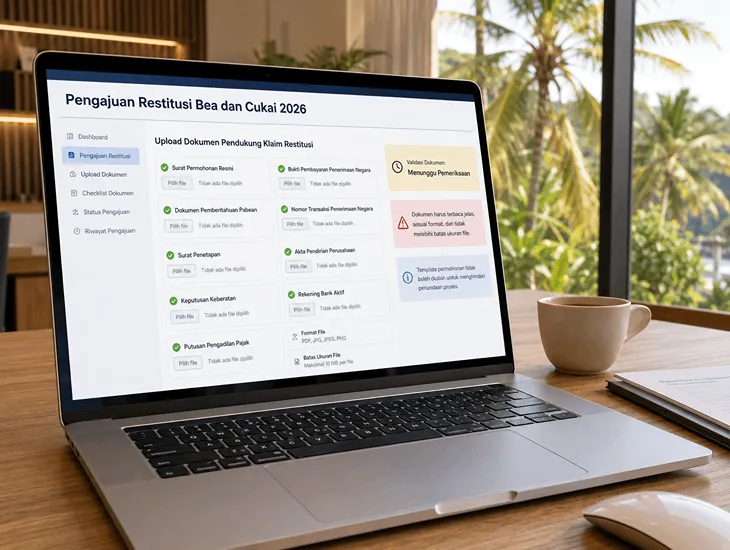
The government enforces rigid temporal boundaries on all border financial claims. The overarching Customs and Excise Restitution Rules framework permits applications within ten years. This timeframe begins on the underlying document date.

Companies face a critical final submission deadline despite the generous ten-year window. You must submit your comprehensive electronic application at least thirty days before the limit expires. Late submissions face automatic rejection.

Customs officials operate under strict internal processing timelines as well. The local customs office must issue a formal approval or rejection within thirty days. This calculation starts upon receiving your complete file.

Missing these tight statutory windows permanently forfeits your overpaid corporate capital. Unclaimed funds remain locked within the national treasury without any further legal recourse. Continuous monitoring remains absolutely vital for importers.

Government auditors reject premature or severely delayed applications without further material review. Proper calendar management ensures your corporate claim enters the system at the correct time. Administrative precision is non-negotiable.

We provide continuous deadline tracking for your cross-border business operations. Our automated systems flag expiring claims long before the official cut-off dates. This ensures your enterprise never loses valuable corporate capital.

The national customs authority processes all modern refund claims through digital channels exclusively. The centralized CEISA portal handles applications electronically to accelerate processing times. Physical paper submissions are no longer standard practice.

Applicants must access the official online customs portal using registered corporate credentials. The digital interface requires precise navigation to the dedicated certificate request menu. Complete accuracy during this phase avoids system errors.

The online application demands a valid electronic stamp on the formal request letter. You must input the exact state revenue transaction numbers matching your payment proofs. Mismatched data delays the entire review.

The integrated digital network links your application directly to central bank systems. This automation ensures rapid communication between distinct government departments. Digital systems process your verification data continuously and accurately.

Foreign directors must secure their digital login credentials to authorize these financial requests. Proper credential management prevents unauthorized access to your corporate tax portal. Security remains a top priority during digital submissions.

Our technical specialists manage this online portal interface on your behalf. We ensure every digital input matches your verified customs receipts perfectly. This professional oversight guarantees seamless electronic processing for your firm.

Starting a new import business requires immense preparation and regulatory knowledge. When Robert launched his premium furniture export company in Bali, he encountered unexpected bureaucratic hurdles. His initial clearance process faced severe complications.

Navigating the complex bureaucratic procedures during his initial business registration in Jakarta proved highly challenging. He established a high-end manufacturing workshop in Uluwatu to ship premium local goods globally.

An administrative error at the local customs office misclassified his imported raw materials under incorrect tariff codes. This misclassification caused significant overpayments and locked up his operational capital.

This cash shortage directly threatened his international manufacturing deadlines. Robert needed a rapid solution to recover his stranded capital and pay his suppliers. That is when he used our expert advisory service.

We audited his scattered customs declarations and identified the specific tariff calculation errors. Our team compiled the necessary electronic evidence and submitted a formal claim through the central online portal.

The government approved his refund within thirty days, returning his capital directly to his corporate account. Now, Robert uses our digital tracking system to process his customs filings accurately.

Customs and Excise Restitution Rules 2026 - Administrative compliance, CEISA digital submissions, and tax reporting in BaliFiling a successful application requires meticulous preparation of specific legal paperwork. Importers must submit a formal written request using the exact prescribed ministerial form. Altering this official template causes immediate processing delays.

You must attach clear digital copies of the original customs declaration documents. Assessment letters, objection decisions, and Tax Court rulings form the core of your evidence file. Missing files invalidate the application.

The authority requires indisputable proof of state revenue payment for every claim. The application must include the official transaction registration number for every disputed payment. This securely links the claim.

Corporate applicants must provide their updated deed of establishment and legal company documents. You must also supply verified proof of an active corporate bank account. The government only remits funds to validated accounts.

The digital portal enforces strict file size limits and specific document formats. Your scanned evidence must remain entirely legible while meeting these technical system constraints. Proper file preparation prevents annoying upload failures.

Our accounting team compiles and structures your evidentiary documentation according to strict ministerial standards. We eliminate discrepancies before final electronic submission. This rigorous preparation guarantees a higher overall approval rate.

Every submitted file undergoes a comprehensive material review by dedicated customs investigators. Officials scrutinize your internal accounting books against official border declarations. This verification process ensures absolute mathematical accuracy for the state.

The head of the local customs office issues the final formal decision. The authority has exactly thirty days to approve or reject the application legally. This precise window begins upon file acceptance.

Incomplete documentation prompts immediate formal rejections or deeper corporate tax audits. The system flags inconsistent data, inviting unwanted regulatory scrutiny to your enterprise. Maintaining clean financial records remains your best defense.

Approved claims receive cash remittances or formal tax offsetting options. The government coordinates closely with the central bank to process these transfers securely. This final step safely restores your working capital.

Rejected applications require companies to address the identified discrepancies and restart the entire submission process. This causes severe delays in recovering your vital corporate funds. First-time accuracy prevents these frustrating administrative loops.

International trading compliance intersects directly with your broader corporate tax obligations. Overpaid customs duties alter your final value added tax calculations significantly. Misalignments between distinct government portals create immediate tax audit risks.

The central tax office monitors import-related tax payments through integrated digital networks. Discrepancies between customs records and your annual corporate tax returns trigger automated warning letters. Unified accounting management solves this issue.

Integrated handling ensures your customs claims align perfectly with national income tax treatments. This comprehensive approach prevents contradictory financial positions between separate government ministries. It secures your entire corporate operational framework.

Foreign investors benefit significantly from coordinating their tax and customs strategies simultaneously. This unified oversight reduces cash leakage and optimizes your overall operational efficiency. It protects your capital from duplicate national taxation.

Reconciling your border transactions with your internal corporate ledgers provides a clear financial picture. This transparency allows your executive team to forecast future cash flows with absolute certainty. Clean data drives growth.

You can recover overpaid import duties, export duties, and related administrative penalties.

You must file electronically at least thirty days before the ten-year limit expires.

Yes, registered corporate entities can access the digital portal using valid corporate credentials.

The authority must issue a formal approval or rejection decision within thirty days of receipt.

The system may reject your file automatically or trigger a deeper corporate compliance audit.

No, government officials will never ask for your passwords or sensitive identification numbers.

Need help navigating the Customs and Excise Restitution Rules, Chat with our team on WhatsApp now!

jmacompany@gmail.com

This author has not yet provided a bio.