

Indonesia Trade Mission 2026 – PT PMA market entry support, tax and legal compliance insights, and business matchmaking for foreign investors in Bali
November 5, 2025

How Can a Trade Mission to Indonesia Boost Your Business Growth in 2026?

Indonesia has rapidly become one of Southeast Asia’s most promising frontiers for global expansion 🌏. Yet for many foreign investors and SMEs, the challenge lies not in ambition — but in understanding Indonesia’s intricate networks, evolving tax regulations, and diverse local business culture. Without proper connections or guidance, even well-funded ventures can struggle to gain traction or compliance clarity.

That’s why joining a structured Indonesia trade mission can change everything 💼. Supported by institutions like the Directorate General of Taxes, the Ministry of Investment (BKPM), and the Indonesian Chamber of Commerce and Industry (KADIN), these missions connect international entrepreneurs directly with vetted partners, reliable advisors, and regulatory insight that turn uncertainty into opportunity.

When a European SME delegation visited Jakarta in 2025 through a coordinated mission by the European Business Council, over 70% of participants closed deals within six months. One German manufacturer even secured distributors across multiple provinces after discovering local buyers who aligned with their growth goals 🚀. These real-world results prove how powerful local expertise can be when structured support meets genuine market potential.

For businesses planning 2026 expansions, this is the moment to act 🌿. Whether you’re entering energy, digital, or service sectors, a trade mission ensures you’re not navigating alone — but guided by professionals who understand both the regulations and the culture. With the right partnerships, Indonesia’s fast-growing economy becomes not a risk, but your most strategic opportunity ✨.

Understanding How Trade Missions Work in Indonesia 2026 đź’Ľ

A trade mission to Indonesia is a government- or organization-led trip designed to connect foreign businesses with potential local partners. These missions open doors to Indonesia’s fast-growing economy — one filled with opportunities in energy, manufacturing, digital services, and agriculture.

In 2026, Indonesia is expected to be one of Asia’s strongest consumer markets. A trade mission gives companies a direct way to meet government officials, attend B2B meetings, and visit industrial sites. Unlike random market visits, missions provide structure — every meeting and tour is pre-arranged for maximum value 💼.

Understanding how trade missions work in Indonesia helps investors and entrepreneurs save time and build relationships that would normally take months to form. These missions blend cultural understanding, business strategy, and government collaboration — creating the perfect entry point into Indonesia’s business ecosystem.

Indonesia Trade Mission 2026 – PT PMA business expansion, tax compliant partnership building, and legal document preparation for foreign investors in Bali

Indonesia’s economy continues to grow at more than 5% annually, and new business opportunities Indonesia 2026 are expanding across multiple sectors. Foreign companies joining trade missions often explore fields like renewable energy, e-commerce logistics, food processing, infrastructure, and digital startups.

The Indonesian government actively promotes cooperation through programs such as the Indonesia Investment Coordinating Board (BKPM) and local chambers of commerce. These entities often support visiting delegations by providing insights into regional market trends and investment zones 🌏.

With 280 million consumers and a thriving middle class, Indonesia offers a market that is both young and digitally connected. Joining an Indonesia trade mission in 2026 lets foreign entrepreneurs understand consumer behavior, identify distributors, and explore government-supported investment zones.
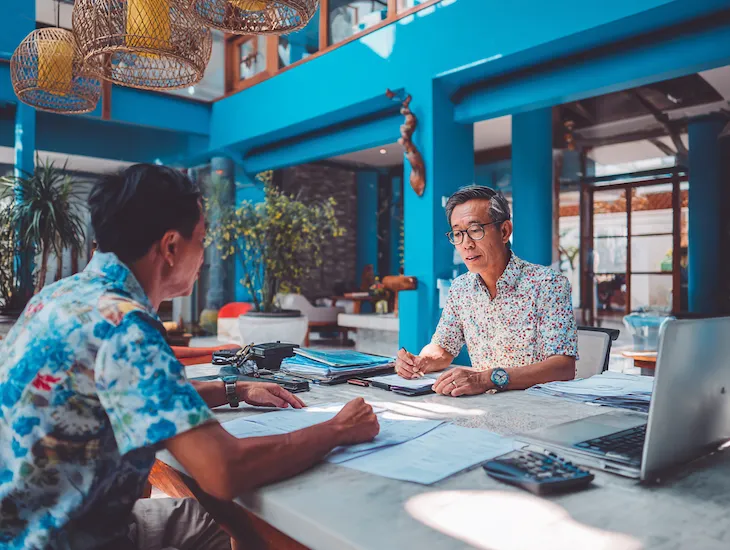
If you’re considering a trade mission, here’s how the process typically works:

🔹 Register with an official trade organization — embassies, chambers of commerce, or export councils.
🔹 Select your sector focus — for example, technology, manufacturing, or energy.
🔹 Prepare company materials — business profiles, brochures, and translated documents.
🔹 Participate in pre-mission briefings — these sessions explain how trade missions work in Indonesia and prepare delegates for meetings.
🔹 Join the mission trip — meet officials, visit factories, attend exhibitions, and network with local firms.

This structured format allows businesses to maximize exposure while reducing risk. Many missions also include interpreters, legal experts, and follow-up sessions after the event ⚙️.

Participating in a trade mission to Indonesia offers far more benefits than attending a single trade fair. Delegates gain access to pre-arranged meetings, investment seminars, and government networking events — all curated to match their business objectives 💡.

The biggest advantage lies in credibility. When you join an official mission, you’re perceived as a serious investor backed by your home government or chamber. This boosts trust among Indonesian partners and opens doors to long-term collaboration.

Other trade delegation benefits Indonesia include reduced entry barriers, real-time market feedback, and post-mission support from both public and private institutions. By joining a 2026 mission, you’re not just exploring opportunities — you’re establishing a sustainable path to business growth.

Meet Laura Jensen, a Danish entrepreneur passionate about green construction technology. In 2025, she joined a government-led trade mission to Indonesia, hoping to introduce eco-friendly building materials to Southeast Asia’s booming property sector.

At first, Laura felt lost navigating Indonesia’s complex business landscape — the language, the legalities, and the cultural nuances. But the mission’s structured program helped her connect with experienced mentors and local experts who guided her through every stage. 

During a meeting arranged by the Indonesia Investment Coordinating Board (BKPM), she learned how to adapt her product to meet environmental standards and government incentives for sustainable housing.

What began as a single introduction soon grew into a collaboration. Laura visited industrial parks in Jakarta and Surabaya, met decision-makers face-to-face, and learned how trust shapes business in Indonesia. 

Within six months, she signed a partnership with a local distributor to launch a new joint venture covering three provinces.

Her success came from preparation, persistence, and transparency. She didn’t just promote her product — she listened, adjusted, and built genuine relationships. The trade mission became her turning point, transforming potential into partnership. 

Today, her company’s story is often cited by BKPM as an example of how Indonesia trade missions can turn ambition into long-term, sustainable growth 📖.

Indonesia Trade Mission 2026 – PT PMA market entry, legal document review, and VAT compliance guidance for foreign investors in Bali

Both public and private institutions play a major role in facilitating Indonesia trade missions. The Indonesian Ministry of Trade, BKPM, and regional governments often collaborate with foreign embassies to host visiting business delegations.

Private chambers of commerce — such as EuroCham, AmCham, and JETRO — also organize sector-specific missions that help companies explore business opportunities Indonesia 2026. They provide local briefings, translation services, and introductions to key decision-makers 🧾.

Such collaboration ensures that each mission combines practical business insight with legal and cultural guidance. This balanced support allows even small businesses to engage in international expansion confidently.

Despite the benefits, trade missions also come with challenges. Participants may encounter differences in business culture, regulatory procedures, or meeting etiquette. Sometimes, translation gaps or unrealistic expectations can limit outcomes.

To overcome these obstacles, mission organizers typically conduct cultural briefings and offer bilingual staff to ensure communication runs smoothly. Businesses are also advised to study how trade missions work in Indonesia before departure 🚀.

The key is preparation — understanding Indonesia’s regional diversity and business ethics helps you connect meaningfully. With patience, professionalism, and follow-up, every participant can turn a short-term visit into a long-term partnership.

To get the most out of a trade mission to Indonesia, preparation and follow-through are essential. Before departure, define your objectives — whether it’s finding distributors, researching the market, or launching a product.

During the mission, take detailed notes from each meeting and stay proactive in follow-ups. After returning, maintain communication with contacts and schedule virtual catch-ups. Success depends not on how many meetings you attend, but how well you nurture the relationships you form 🌟.

In 2026, digital tools like CRM systems and virtual trade platforms will make it easier to maintain post-mission engagement. Combining these tools with cultural understanding ensures that your participation translates into measurable growth.

It’s a government-backed or chamber-led trip helping businesses meet local partners, explore markets, and build international trade connections.

Register through your country’s trade agency, embassy, or chamber of commerce, and select a mission that fits your industry.

Manufacturing, renewable energy, digital services, agriculture, and construction are key focus areas for 2026.

Absolutely! Many missions cater specifically to SMEs seeking export or partnership opportunities.

They offer structured meetings, official recognition, translation support, and government access — maximizing your chance of success.

Need help joining a trade mission to Indonesia? 💼 Chat with us now on WhatsApp! ✨

Gita

Gita is graduate from Udayana University and a dedicated blog writer passionate about crafting meaningful, insightful content with focus on topics related to work, productivity, and professional growth.