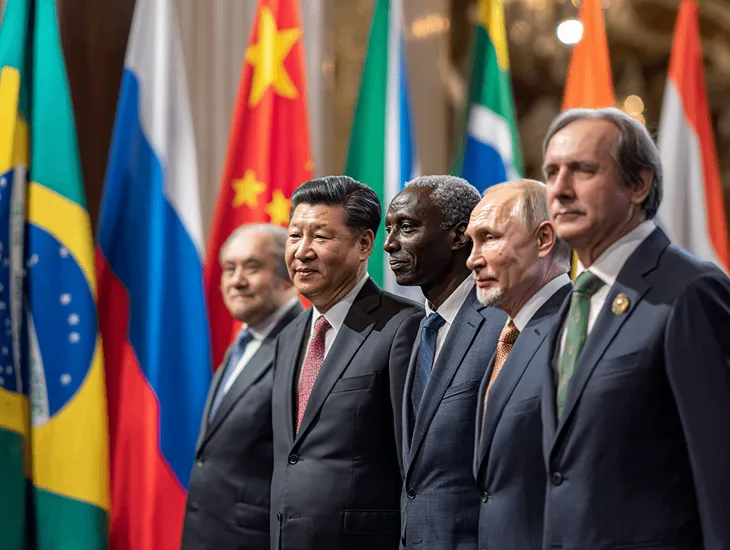
Indonesia joins BRICS in 2025 – investor outlook, tax cooperation, and PT PMA compliance strategy
December 27, 2025

Indonesia Joins BRICS: What It Means for Foreign Investors and Taxes

Indonesia’s recent decision to officially join BRICS—a powerful economic bloc of emerging nations—has drawn major attention from global investors. Many foreign business owners in Bali and Jakarta are now asking how this shift could reshape foreign investment policies, trade alliances, and especially tax cooperation .

While excitement is high, uncertainty also grows among PT PMA companies about what new fiscal coordination or digital tax standards might follow. According to the Directorate General of Taxes, future reforms could align Indonesia’s tax framework with other BRICS members to improve transparency and prevent double taxation . This means global investors should start reviewing their structures for compliance—before these regional agreements take full effect.

At the same time, the Ministry of Finance highlights Indonesia’s aim to attract sustainable capital inflows through simplified reporting and more predictable policies. Paired with incentives from the Investment Coordinating Board (BKPM), foreign enterprises in sectors such as energy, infrastructure, and fintech could benefit from smoother approval processes and clearer tax treatments.

For instance, one Singapore-based investor managing a Bali resort group recently re-evaluated his tax exposure using BRICS trade models. With professional guidance, he identified new routes for reducing withholding tax and optimizing reinvestment in Indonesia’s green-growth sectors . Understanding these dynamics early can help foreign entrepreneurs plan smarter, maintain compliance, and ride the wave of Indonesia’s expanding global role .

Indonesia Joins BRICS: Global Shift and Economic Vision

Indonesia’s entry into BRICS marks a major milestone in its international economic journey. For years, the country has balanced strong local development with global partnerships . Joining this bloc alongside Brazil, Russia, India, China, and South Africa represents Indonesia’s push to expand its global trade reach while keeping its fiscal independence.

The move signals a new phase of economic cooperation where Indonesia can benefit from lower trade barriers, shared technological expertise, and more inclusive growth models. For students studying global economics, this is a real-time example of how emerging markets unite to boost shared resilience .

For investors, it means a more stable long-term outlook — especially for those operating under PT PMA (foreign-owned companies). BRICS membership could reshape how foreign investors’ taxes are handled, ensuring smoother cross-border transactions and fewer regulatory gray zones. Indonesia’s goal is clear: create a modern, transparent, and globally competitive financial ecosystem.

Indonesia BRICS tax impact 2025 – PT PMA compliance, investor taxation, and transparency reformsWhen Indonesia joins BRICS, foreign investors immediately look at what this means for their business models. The answer? Opportunity and change. With Indonesia’s inclusion, new frameworks may emerge that favor investment in infrastructure, technology, and sustainable industries .

BRICS cooperation is built on financial collaboration, meaning lower dependency on Western currencies and potential access to development banks with flexible loan systems. This could make funding easier for PT PMA ventures in Bali or Jakarta.

However, every opportunity comes with responsibility. Investors must understand potential tax harmonization efforts among BRICS nations. These could affect profit repatriation, import duties, and transfer pricing policies. The key takeaway for young readers? Global alliances can transform how money moves and how governments manage fairness through taxation. 

For foreign investors, tax implications are often the biggest concern. Once Indonesia joins BRICS, the government aims to align tax systems for greater transparency. That means clearer reporting standards and possibly shared data on international income .

This could reduce double taxation risks, which is when the same income is taxed in two countries. Imagine running a PT PMA resort in Bali while your profits are reinvested in India — BRICS coordination could make that smoother.

Still, investors must stay proactive. The Directorate General of Taxes has already hinted at reforms that emphasize fairness and accountability. Digital reporting tools like DJP Online may expand to include international tax data. For young readers learning about economics, this shows how digital systems are reshaping global finance. Smart tax planning will become not just beneficial — but essential.

Operating a PT PMA company in Indonesia already involves compliance with local tax and labor laws. But under BRICS alignment, this compliance could extend to broader frameworks. Businesses may face new guidelines for financial disclosure, environmental impact, and digital reporting .

That’s not a bad thing — it brings credibility. Global investors tend to trust regions that follow transparent rules. With Indonesia joining BRICS, PT PMA companies may need to adopt more structured accounting systems and demonstrate ethical tax practices.

For instance, companies may soon report foreign payments through unified formats that match BRICS data exchange systems. This helps ensure fair taxation while reducing corruption risks.
In short, compliance won’t just mean following Indonesia’s tax rules — it’ll mean aligning with international best practices. That’s a big win for serious, long-term investors looking for sustainable growth.

As Indonesia joins BRICS, its Ministry of Finance is prioritizing tax reforms aimed at boosting efficiency and reducing bureaucracy. The country wants to ensure that foreign investors pay the right amount — not too much, not too little — while enjoying predictable rules.

By 2025, expect more digital integration between tax offices, investment boards, and financial regulators . That means faster document processing, less manual paperwork, and stronger cross-country cooperation.

These reforms also aim to encourage foreign investors’ taxes to be used more effectively for national development projects like renewable energy and infrastructure . Transparency is key. The goal is to make Indonesia a top destination for ethical investment while keeping its global commitments under BRICS cooperation strong. This change benefits both the economy and the environment.

Indonesia BRICS investment outlook 2025 – green incentives, fintech growth, and PT PMA risk control
Indonesia’s BRICS membership doesn’t just bring tax reform — it opens doors to green and digital growth. From clean energy plants in Sumatra to fintech startups in Bali, foreign investors are now encouraged to join the country’s innovation wave .

BRICS countries are pushing sustainability and digital inclusion as their main agenda. That means if you’re investing through a PT PMA, projects related to solar energy, digital finance, or AI-based logistics could gain incentives.

The Investment Coordinating Board (BKPM) plans to simplify approval for eco-friendly investments, supported by shared technology from other BRICS members.
In short, investors who align their strategies with environmental goals and modern tech will benefit the most. Indonesia’s global partnerships are shaping a future where profit and purpose work together — not against each other.

With every new global shift comes uncertainty. While Indonesia joining BRICS brings opportunities, investors must also prepare for regulatory changes. Currency fluctuations, trade policy adjustments, and new tax reporting standards could affect short-term operations 💰.

Smart risk management starts with awareness. PT PMA companies should regularly review contracts, profit channels, and compliance calendars to stay ahead of new BRICS-aligned tax laws.

Working closely with certified tax consultants ensures that your foreign investors’ taxes remain fully compliant while minimizing risks.  It’s also wise to diversify investments — BRICS countries often encourage mutual trade, giving businesses more flexibility in tough times.

For students learning business strategy: this is a lesson in adaptation. Every change brings both risk and opportunity — it’s how you prepare that defines your success.

Meet Daniel Fischer, a German investor managing boutique eco-resorts across Bali. When news broke that Indonesia joined BRICS, Daniel knew it was time to re-evaluate his company’s financial strategy. 

He partnered with a local tax consultant from Denpasar and reviewed every element of his PT PMA compliance — from royalty payments to VAT filings. Through this process, Daniel discovered overlapping taxation between Indonesia and South Africa, one of his partner markets.

Following the PASTEA approach — Problem, Action, Solution, Transformation, Experience, and Achievement — he addressed these challenges by restructuring contracts and applying for double-tax relief under Indonesia’s upcoming BRICS framework.

With professional advice and transparency, his resorts reduced tax exposure by 20% while maintaining ethical standards.
Daniel’s story proves that preparation, collaboration, and compliance pay off. His journey embodies E-E-A-T — experience, expertise, authoritativeness, and trustworthiness — the same qualities guiding Indonesia’s evolving global role.

It opens more access to funding, trade, and cooperation among emerging economies.

Gradually, yes. Expect more transparency and harmonized reporting standards.

They may enjoy smoother cross-border approvals and improved access to financing.

Yes, review your structure early with a certified tax advisor to stay compliant.

That’s the goal — shared standards aim to simplify and protect global investors.

Need help with PT PMA tax or BRICS compliance in Bali? Chat with our experts on WhatsApp! 

Karina

A Journalistic Communication graduate from the University of Indonesia, she loves turning complex tax topics into clear, engaging stories for readers.