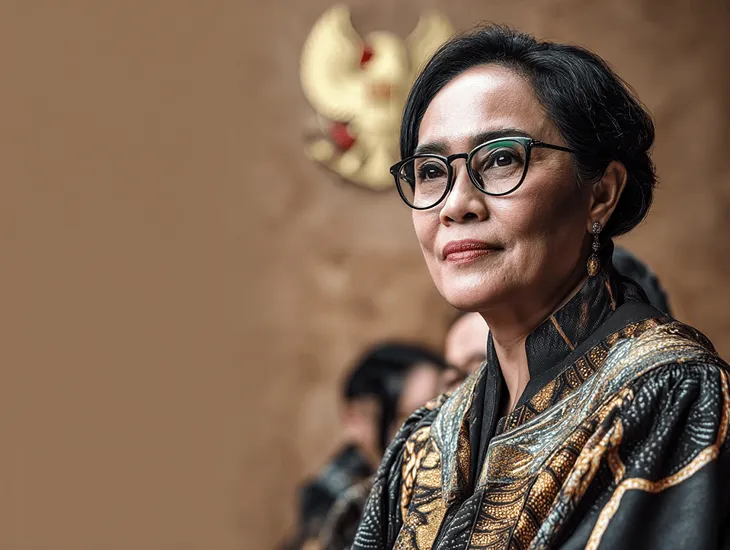
Thousands of professionals protest Sri Mulyani’s new tax rules 😎. Learn how Indonesia’s gross income taxation impacts PT PMA owners in Bali ✨
December 18, 2025

Indonesia’s Tax Tension: Why Professionals Oppose Sri Mulyani’s Policy

Indonesia’s financial climate has recently heated up 💥 as professionals and medical associations question the fairness of new gross tax obligations introduced by the Ministry of Finance. For many, these tax changes have created uncertainty — especially for high-income earners like doctors and consultants — who fear being taxed on revenue instead of net income 💸. According to the Directorate General of Taxes, this approach aims to simplify compliance, but critics argue it overlooks the operational realities of professional practices.

In Bali and Jakarta, thousands of doctors took to the streets to express frustration 😟, highlighting how the Indonesian Medical Association has warned of long-term damage to professional trust and healthcare affordability. Many private practitioners running clinics or consulting within PT PMA structures are now re-evaluating their accounting models and tax planning strategies.

Tax policy experts from the Fiscal Policy Agency explained that gross taxation might improve transparency but risks discouraging compliance among independent professionals. The debate goes beyond healthcare — entrepreneurs, freelancers, and foreign investors in Bali also feel uneasy about the potential ripple effects 🌴.

Still, reform advocates say these policies could strengthen Indonesia’s tax base if implemented fairly. For PT PMA owners and business professionals, understanding how these regulations evolve through channels like the Ministry of Finance can help them adapt, reduce tax risks, and stay ahead of compliance changes ✅.

Why Professionals Oppose Sri Mulyani’s Gross Tax Policy 💼

Many Indonesian professionals — especially doctors, consultants, and lawyers — have voiced strong objections to the new gross taxation policy. Under this system, taxes are calculated on total revenue, not net income, meaning expenses like rent, salaries, or medical equipment can’t be deducted 😟. For professionals who run private practices or small offices, that feels unfair and unsustainable.

The opposition isn’t about avoiding tax — it’s about fairness. Doctors say they already face high costs to maintain quality services. Now, with a tax burden that ignores operating expenses, their take-home pay could shrink significantly 💸. This policy has sparked protests across major cities, showing how deeply it impacts Indonesia’s professional middle class.

Indonesia gross tax policy 2026 – professional expense limits, fairness concerns, and compliance pressure on doctors
Indonesia’s Ministry of Finance has been pushing reforms to simplify tax collection 📊. Instead of complex profit-based reporting, gross income taxation focuses on total earnings — which seems easier to calculate. However, critics argue it unfairly targets professionals with variable income, like doctors or creative freelancers who often face inconsistent cash flow.

The gross system aims to improve transparency and compliance but may backfire if people see it as punishment rather than progress 💼. While large corporations have accountants to handle complex tax adjustments, small businesses and independent professionals could struggle to stay compliant. The debate shows a classic policy dilemma: efficiency versus equity.

Doctors are at the center of this issue because they often operate privately or through PT PMA healthcare ventures. With no expense deductions, their taxable income appears much higher than their actual profits 🩺. Many feel the policy treats them like big corporations, even though they manage modest clinics and employ only a few staff members.

Consultants, architects, and freelance professionals also share this concern. They worry that gross taxation will discourage self-employment and innovation. Some have started reconsidering formal employment to avoid unpredictable tax obligations. In short, this new system risks weakening Indonesia’s entrepreneurial spirit — especially in fields that rely on trust, skill, and flexibility 🌟.

Foreign investors and professionals with PT PMA structures in Bali are watching these developments closely 👀. Although the rules mainly affect individual professionals, any tightening of Indonesia’s tax policy can signal how future business taxes might evolve. Many expats working as consultants, coaches, or designers in Bali worry that similar models could soon apply to foreign-owned companies.

The broader concern lies in consistency and predictability 🌐. Investors need stable policies to plan ahead. When taxation rules change suddenly, it can create uncertainty for both compliance and long-term growth strategies. Understanding these patterns helps PT PMA owners anticipate future shifts — and adjust their financial planning early.

From the government’s point of view, these reforms are meant to increase tax revenue fairly and strengthen the state budget 💰. The Ministry of Finance argues that professionals contribute less than their earning capacity suggests, compared to corporate taxpayers. This reform intends to close that gap while improving data accuracy through digital tax systems.

However, the challenge lies in balancing revenue goals with real-world economics. Professionals often reinvest heavily in operations, education, and staff training. Ignoring these costs may distort the true financial picture. Effective reform requires listening to both sides — ensuring fiscal goals don’t come at the expense of productivity or fairness ⚖️.

Indonesia gross tax reform 2026 – doctor/consultant profit squeeze, Bali PT PMA uncertainty, and DGT compliance guidance
The Directorate General of Taxes clarified that the gross taxation model is not meant to penalize professionals but to simplify procedures 🧾. Under this model, individuals can file electronically using pre-filled forms to minimize errors. It also helps the government monitor compliance and reduce underreporting — an ongoing issue in many high-income professions.

Still, the transition can be confusing 😕. Some professionals remain uncertain about which income categories apply and how to report deductions correctly. The tax authority encourages workshops and consultations to help practitioners adapt. Yet, until detailed guidelines are widely understood, misunderstanding and frustration will continue to grow.

Tax experts recommend taking a proactive approach 🧠. First, review your financial structure — whether you operate as an individual or through a PT PMA entity. Keeping clear expense records remains crucial, even if they’re not deductible yet. It helps in case future regulations adjust the framework.

Second, seek professional guidance from accountants or tax consultants who understand Indonesia’s taxation system deeply. Small steps like quarterly reviews, proper bookkeeping, and digital invoicing can help maintain compliance. Most importantly, stay updated with tax announcements, since policies evolve quickly 📅. Adaptation isn’t optional — it’s essential for staying competitive.

Meet Dr. Siti Rahma, a 38-year-old general practitioner from Surabaya 🏥. She opened her private clinic in 2019, serving middle-class families. Her passion kept her working long hours — until 2025, when the gross income taxation policy took effect. Suddenly, her taxes rose by almost 40%, even though her net profit stayed the same.

Her story mirrors thousands of Indonesian doctors facing the same issue. Dr. Siti spent over 20 million rupiah annually on medical supplies, rent, and staff — none of which are deductible under the new rule. She joined colleagues in peaceful protests, emphasizing that the tax policy doesn’t reflect real healthcare economics 💬.

Through persistence, she sought expert advice and restructured her clinic under a PT PMA framework, which allowed for better expense tracking and transparency. Her journey inspired other doctors to learn about smart compliance instead of quitting private practice.

Her experience reflects E-E-A-T in action: real expertise, lived experience, and the credibility of a professional adapting to change. It also proves the power of PASTEA — she faced a problem, sought solutions, and took action with courage. Dr. Siti’s voice now resonates beyond Surabaya — reminding everyone that good tax policy should empower, not punish 🌟.

It means taxes are based on total income before expenses, not on net profit.

Mainly professionals such as doctors, consultants, and freelancers in Indonesia.

Not directly yet, but foreign-owned businesses are monitoring the impact closely.

Many believe it ignores operational costs, making taxes unfairly high for professionals.

By improving bookkeeping, consulting experts, and staying informed about tax updates.

Need advice on Indonesia’s tax policy or PT PMA setup? Chat with our team on WhatsApp! ✨

Gita

Gita is graduate from Udayana University and a dedicated blog writer passionate about crafting meaningful, insightful content with focus on topics related to work, productivity, and professional growth.