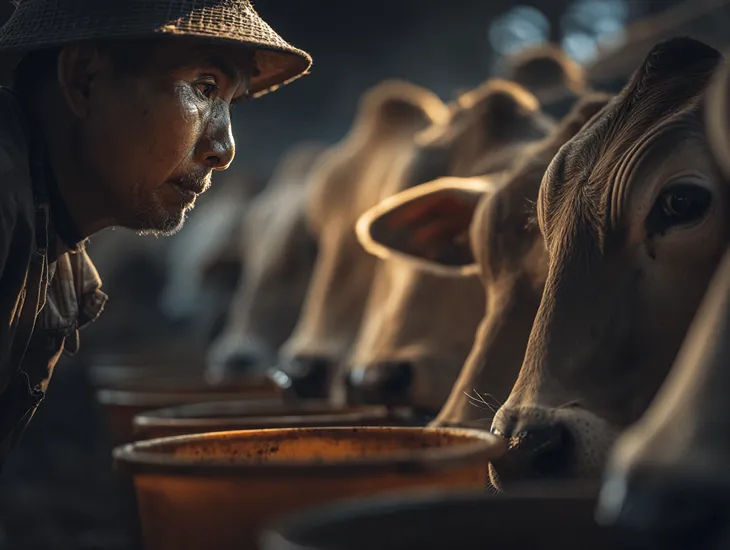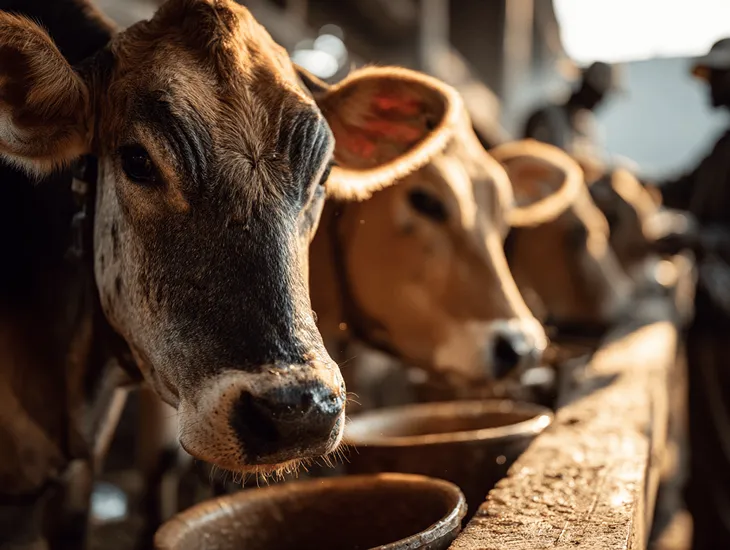
For many foreign investors observing Eid al-Adha in Bali, the holiday brings a sudden, vibrant surge in local economic activity. Temporary markets for goats, sheep, and cows pop up on street corners from Denpasar to Canggu, generating significant cash turnover in a very short window. This seasonal trade offers lucrative opportunities for agricultural investors and local partners alike.
However, significant confusion often arises regarding the fiscal responsibilities attached to these rapid transactions. Does purchasing a bull for the community trigger a tax event for your company? Are the substantial profits from these pop-up livestock sales subject to standard corporate income tax? The lack of clarity regarding Qurban Tax in Indonesia often leads to unintentional non-compliance.
This guide clarifies the specific regulations surrounding sacrificial animal levies to help you navigate the holiday season without fiscal errors. We will explain the distinct obligations for sellers, the non-deductible nature of the expense for buyers, and how to stay compliant with the Directorate General of Taxes (DJP). By distinguishing between religious acts and commercial gains, you can ensure your participation in the festivities is legally sound.
Table of Contents
- Core Principles in Indonesia: Is Qurban Taxable?
- Tax Treatment for Individual Buyers in Indonesia
- Zakat Deductions vs Qurban Spending
- Income Tax for Qurban Sellers
- VAT Rules for Livestock Sales
- Real Story: The Expat Livestock Partner
- Withholding Tax for Government Buyers
- Common Compliance Risks and Audits
- FAQs about Qurban Tax in Indonesia
Core Principles in Indonesia: Is Qurban Taxable?
For the individual worshipper, performing qurban is fundamentally a religious act of devotion. The Indonesian tax office acknowledges this distinction, viewing the sacrifice as personal worship rather than a transaction for gain. Consequently, for the person buying the animal to sacrifice, the act itself does not trigger taxable income or a specific tax liability.
However, the transaction changes character completely when viewed from the seller’s perspective. For the merchant or farmer, this is a commercial activity driven by profit. The income generated from selling livestock, even for religious purposes, is fully taxable commercial income under Indonesian law. This distinction is the foundation of Qurban Tax in Indonesia.
Foreign investors involved in agriculture must distinguish clearly between charity and commerce. While the buyer performs a charitable act, the seller engages in a profit-seeking venture. This dual nature defines the fiscal landscape of the holiday.
Consequently, tax enforcement focuses primarily on the supply side of the trade. The government aims to tax the economic gain of the trader, ensuring fair contribution to the state, not the piety of the buyer. Understanding this balance is essential for mastering seasonal livestock reporting.
When you purchase a goat or cow for qurban, the expense is treated as personal consumption. In the eyes of the tax law, this is fiscally similar to buying food, clothing, or household goods for yourself. It is a private use of funds that falls outside the deductible scope of sacrificial animal levies.
Consequently, the expense is generally not deductible from your annual income tax. You cannot subtract the cost of the animal to lower your taxable income in your personal tax return. This applies even if the meat is distributed to the poor, as per the standard interpretation of Qurban Tax in Indonesia.
Many expats assume charitable acts are automatically deductible, similar to systems in the West. In Indonesia, strict rules apply to charitable deductions. Standard qurban spending does not meet the technical requirements for a tax deduction in your annual filing, distinguishing it from other aspects of fiscal obligations.
Therefore, you should record this simply as living expenses if you track personal cash flow. There is no special form to file for the purchase itself. It remains a private transaction between you and the seller, bearing no direct impact on your personal liability regarding holiday trade rules.
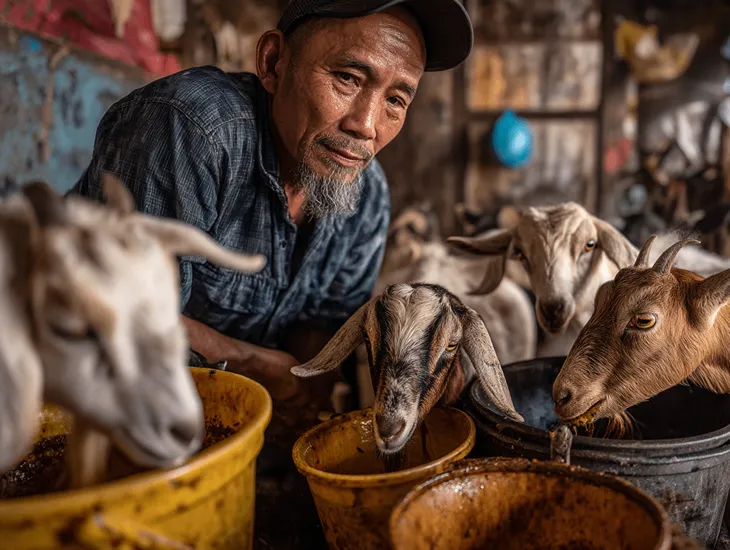
Different rules apply to Zakat, the mandatory Islamic alms. Government regulation PP 60/2010 allows mandatory religious donations to reduce taxable gross income. However, this benefit applies only if the donation is paid to an approved body like BAZNAS (Badan Amil Zakat Nasional), a nuance often confused with religious commerce tax.
The distinction is key here for taxpayers. Qurban is not technically Zakat in the fiscal sense; it is a separate ritual. Therefore, it does not automatically qualify for this deduction under standard tax regulations or the framework of Indonesian tax law.
Only payments explicitly receipted as Zakat by approved bodies qualify for the tax reduction. These bodies include BAZNAS or approved LAZ institutions. You must attach the official proof of payment to your annual tax return to claim it.
If you channel funds through these bodies, ensure the receipt is specific. A receipt marked “Qurban” may not be accepted as a deduction by an auditor. Conversely, a receipt marked “Zakat” or “Sumbangan Keagamaan” will be valid for tax reduction.
If you are a business selling animals, you must report this income. For small enterprises with a gross turnover under IDR 4.8 billion, a final tax rate often applies to this seasonal revenue, which is a critical component of Qurban Tax in Indonesia.
This rate is currently 0.5% of gross turnover for eligible MSMEs (UMKM). You must record daily sales during the festive season. This final tax must be paid monthly and reported in your annual tax return to satisfy obligations regarding seasonal livestock reporting.
For larger entities, standard corporate rates apply. If your PT PMA turnover exceeds the threshold, you pay the normal corporate rate. This is calculated on net profit rather than gross revenue, currently set at 22%.
Failure to report this creates a significant liability. Even if the business operates for only one month a year, the tax obligations remain fully active. The tax office does not overlook “pop-up” businesses when enforcing holiday trade rules.
Live livestock is classified as a basic necessity (barang kebutuhan pokok) in Indonesia. This means the sale of cows, buffalo, goats, and sheep for qurban is exempt from Value Added Tax (VAT). This exemption is a specific relief within the broader scope of Qurban Tax in Indonesia.
Sellers should not charge 11% VAT to their customers. Issuing a VAT invoice is not required for these specific exempt goods. This exemption helps keep the price of sacrificial animals affordable for the community and simplifies fiscal obligations for traders.
However, this exemption applies strictly to the animal itself. If you provide butchering, processing, or delivery services separately, those services might be taxable. You must assess the nature of your service offerings carefully to avoid non-compliance.
Investors in livestock in Bali should note this exemption for their financial modeling. It simplifies pricing strategies significantly during the holiday. You do not need to factor in VAT output tax when calculating your selling price.
For Declan, the Eid season was a goldmine waiting to be tapped. The 50-year-old investor from Limerick, Ireland, partnered with a local farm in early 2024 to sell premium bulls. Sales were booming, and the venture generated massive cash flow in just three weeks.
Declan assumed the festive, short-term nature of the trade made it tax-exempt or “under the radar” regarding religious commerce tax. He failed to record the transactions in his PT PMA books, treating it as a casual side hustle. He was wrong.
A few months later, the tax office flagged the sudden spike in his bank activity. They demanded an explanation for his “hidden” revenue, turning his seasonal success into a potential audit nightmare involving fiscal obligations. Facing fines for under-reporting income that could wipe out his profits, Declan panicked.
He contacted a professional tax consultancy in Bali to audit his accounts. They reconstructed his sales data and filed the 0.5% final tax correctly. Declan saved his business from severe penalties, learning that in Indonesia, even seasonal goldmines are subject to strict reporting.
Sometimes, government bodies or state-owned enterprises buy animals for distribution. In this specific case, the treasurer must withhold Income Tax Article 22 (PPh 22). The rate is generally 1.5% of the purchase price, a specific mechanism of seasonal levies.
This withholding tax acts as a prepayment of your annual tax liability. Ensure you collect the tax slip (Bukti Potong) from the government treasurer. This document is vital for your annual tax credit claims and proof of compliance.
Sellers often forget to collect this proof during the busy season. Without it, you effectively pay tax twice. You pay via withholding, and then again on your annual return if you cannot prove the prepayment related to holiday trade rules.
Always clarify the tax status of your buyer before closing the deal. If they are a government entity, expect the 1.5% deduction. Factor this into your cash flow projections for the holiday season to avoid liquidity issues.
The most common mistake is under-reporting seasonal income. Tax officials use data matching to find discrepancies in bank accounts. Unexplained wealth or asset increases after the holiday season can trigger an investigation into your adherence to sacrificial animal levies.
Another risk involves using Zakat funds improperly. Funds collected specifically for Zakat should not be used to buy qurban animals. This violates religious distribution rules and can cause compliance issues for charitable institutions.
Proper documentation is your best defense against these risks. Always issue receipts, even if VAT is not applicable. Keep detailed records of the source of funds for purchases to satisfy any future inquiries regarding religious commerce tax.
Understanding these tax implications prevents surprises. Treat seasonal sales with the same rigor as year-round business. Compliance ensures your contribution to the holiday remains positive and legally sound within the framework of holiday trade rules.
Generally no, unless it is structured as Zakat and paid to an official body, which differs from standard rules.
No, livestock is considered a basic necessity and is exempt from VAT under the regulations.
Typically 0.5% of gross turnover if they qualify as an MSME (UMKM), a key rate in the industry.
Yes, government treasurers usually withhold PPh 22 at 1.5%, which is a standard procedure.
Yes, any profit generated from trading livestock is taxable income and falls under the scope of seasonal levies.
Need help with Qurban Tax in Indonesia? Chat with our team on WhatsApp now!
Karina
A Journalistic Communication graduate from the University of Indonesia, she loves turning complex tax topics into clear, engaging stories for readers.